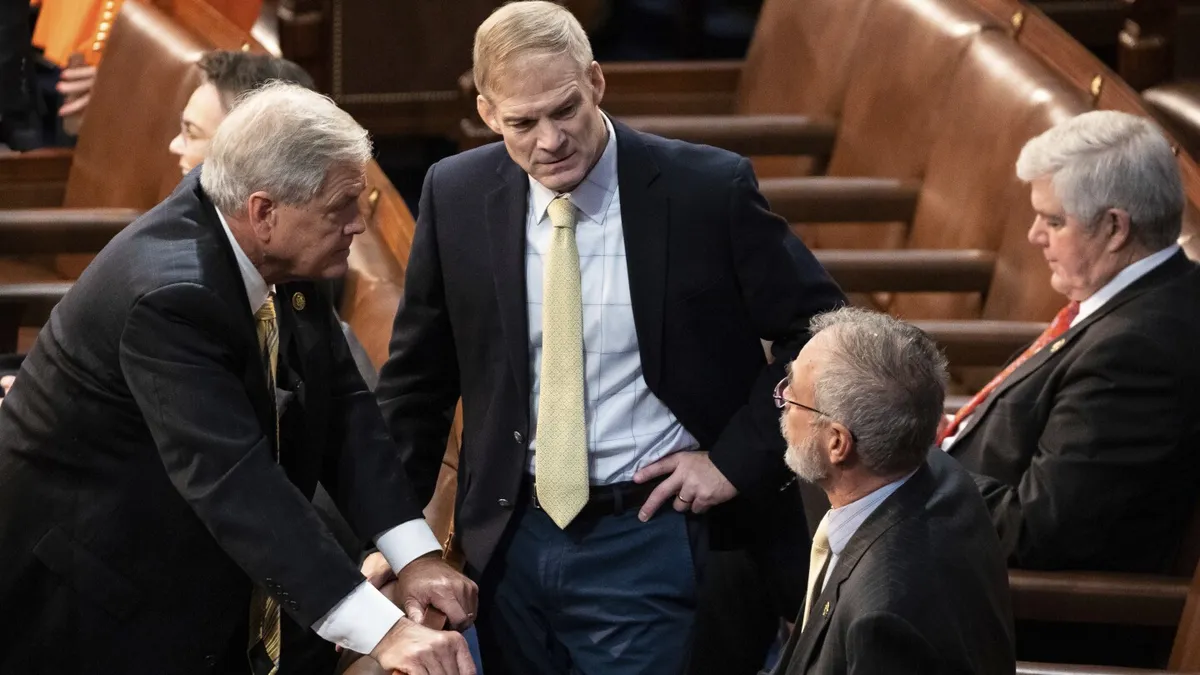
Jim Jordan has undergone a rebranding effort in the past three years to broaden his support within the Republican Party. As the House Judiciary Chair, he has been a prominent figure in the GOP, known for his staunch conservative views and alignment with the Freedom Caucus. However, his previous refusal to support candidates outside this faction has complicated his leadership aspirations. In 2023, Jordan made a bid for the speaker’s position, which ultimately did not succeed, but it has set the stage for his potential future endeavors.
Recently, there have been indications that Jordan is preparing for a leadership bid, particularly if Republicans lose their majority in the upcoming elections. He has raised over $1.3 million for the National Republican Congressional Committee, showcasing his commitment to the party and its candidates. This financial backing is crucial as it positions him as a key player in the party’s strategy moving forward.
Jordan has also made a concerted effort to change his policy stances to appeal to a broader base within the Republican Party. His approach includes campaigning for candidates who opposed him during his speaker bid, indicating a willingness to unite the party, albeit with some reservations from the Freedom Caucus members. “I just help everyone, that’s always been my mindset,” Jordan stated, reflecting his shift towards a more inclusive strategy.
Despite these efforts, Jordan’s leadership ambitions are not confirmed, as he has not publicly declared them. Observers note that his changing policy stances may have mixed effects on his support within the party. Some believe that while he may be a strong candidate for minority leader, his past actions could hinder his chances for a more prominent role. “In my heart of hearts, I think he would be a much better minority leader than a speaker,” one political analyst remarked.
Jordan’s leadership bid would face competition from other notable figures within the party, including Steve Scalise and Tom Emmer. Each of these candidates brings their own strengths and support bases, making the race for leadership potentially contentious. Jordan’s previous stance of not supporting non-Freedom Caucus members may come back to haunt him as he seeks to broaden his appeal.
As the political landscape evolves, Jordan has publicly stated that he is focused on helping Republicans maintain their majority. His fundraising efforts have included supporting ideologically diverse members, which could enhance his standing among various factions within the party. However, the impact of these changes remains to be seen, and details remain unconfirmed regarding his exact plans for a leadership bid.
As the Republican Party gears up for the next election cycle, the dynamics surrounding Jim Jordan’s potential leadership bid will be closely monitored. With the stakes high and the party’s future uncertain, how Jordan navigates this landscape could significantly influence his political trajectory and the GOP’s overall strategy.