Kilauea Eruption: Significant Activity Reported at Hawai‘i Volcanoes National Park
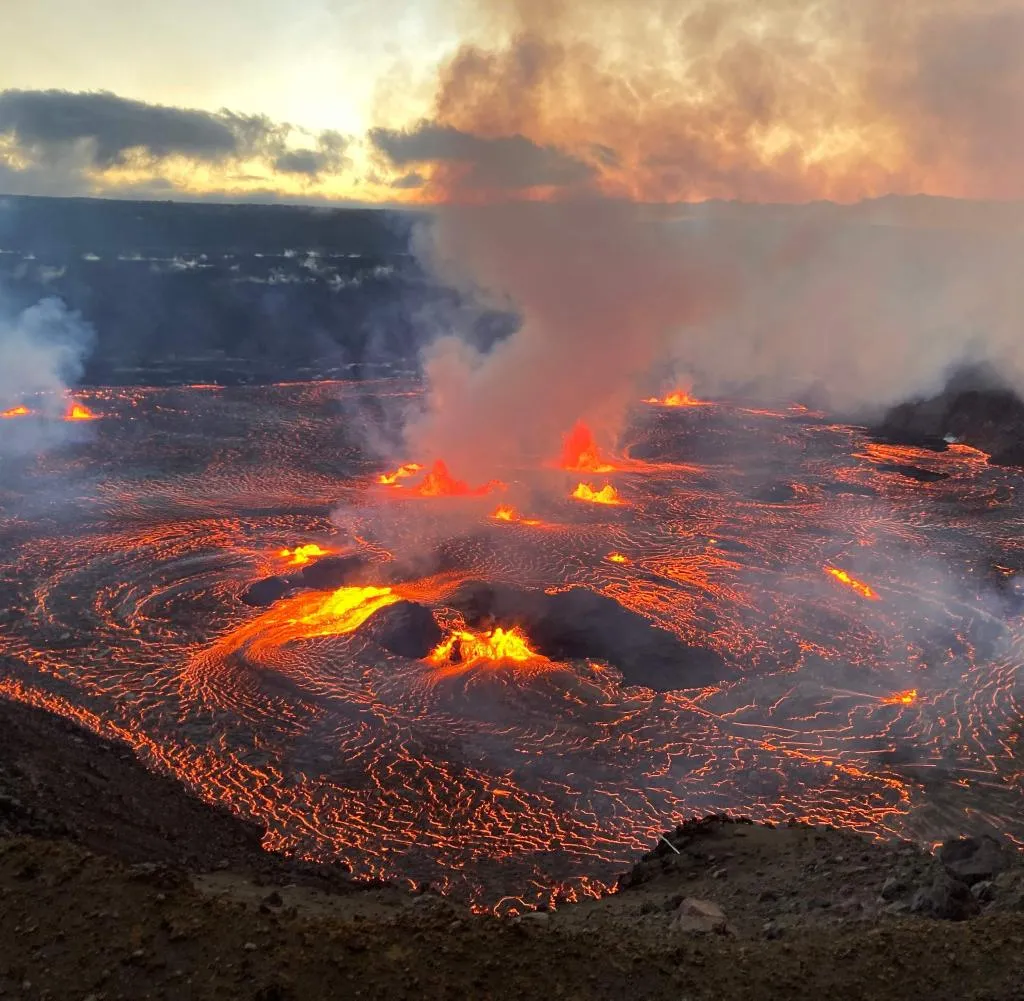
On March 10, 2026, the Kilauea volcano erupted at 9:17 a.m., marking the beginning of Episode 43 of its ongoing volcanic activity. The eruption is currently confined to the Halemaumau crater within Kilauea’s summit caldera, and the Hawaiian Volcano Observatory has raised the alert level to warning, with the aviation color code set to red.
As the eruption unfolded, lava fountaining was observed reaching heights of 1,150 feet from the south vent and 1,000 feet from the north vent. The initial stages of the eruption also saw tephra fallout beginning around 9:50 a.m., with reports of football-sized tephra pieces falling onto roadways in the vicinity. The accumulation of ashfall is expected to exceed a quarter-inch in affected areas.
Highway 11 has been closed between mile markers 24 and 40 due to dangerous conditions resulting from the eruption. The National Weather Service has issued an ashfall warning for Hawai‘i Volcanoes National Park and surrounding areas, which is in effect until 5 p.m. Residents in these areas are urged to seal windows and doors, protect electronics, and remain indoors unless absolutely necessary.
The eruption has produced ash plumes that have reached an altitude of 25,000 feet above sea level. In the aftermath of the eruption, tephra fallout has been reported to measure up to 3 inches in diameter in Volcano Village and Mauna Loa Estates, while Royal Hawaiian Estates has seen tephra pieces measuring around 0.5 inches in diameter.
The Hawaii County Civil Defense Agency has emphasized the seriousness of the situation, stating, “A Volcano WARNING means a hazardous eruption is imminent, underway, or suspected.” Sensitive individuals affected by volcanic gases are advised to shelter indoors or evacuate the area to avoid health risks associated with the eruption.
In light of the unpredictable spread of volcanic gases and debris due to light, variable winds near the vents, the Hawaiian Volcano Observatory has cautioned that these emissions could affect neighboring communities. Residents are advised to exercise extreme caution, especially when clearing rooftops of ash.
Kilauea is recognized as one of the world’s most active volcanoes, and its eruptions have historically posed risks to nearby populations and infrastructure. The current eruption, classified as Episode 43, follows a previous episode that lasted for 10 hours of continuous fountaining. As the situation develops, authorities continue to monitor the volcano closely, and further updates will be provided as necessary.