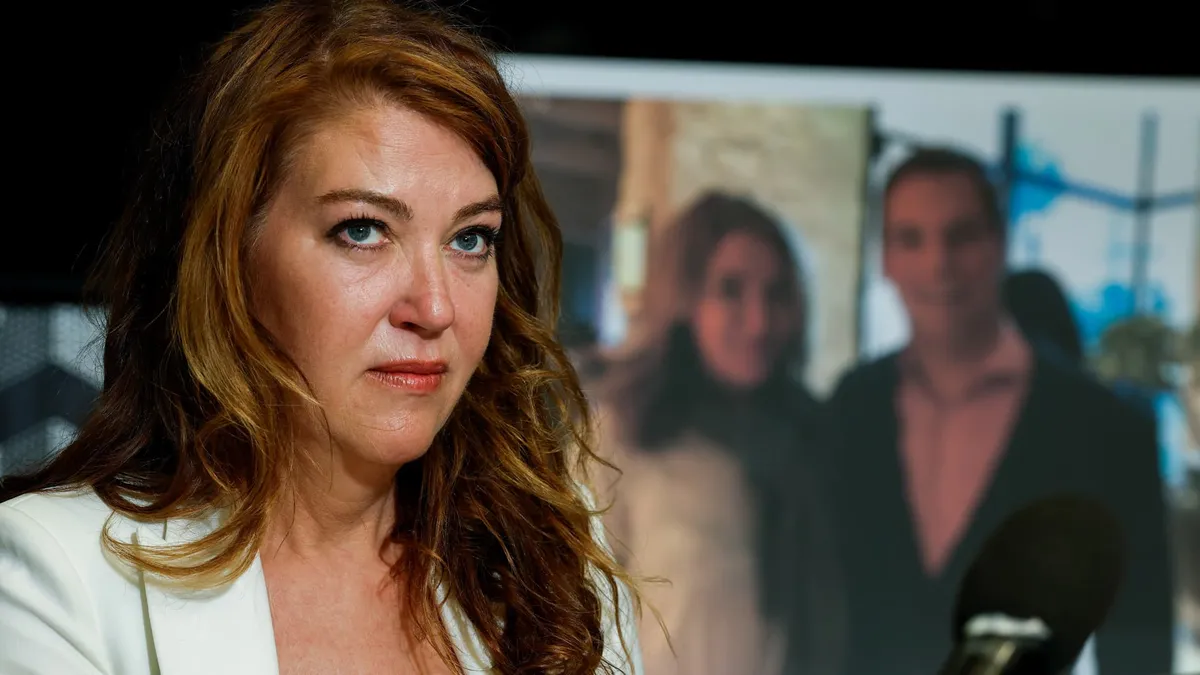
“I did not consent to any sexual activity,” Lonna Drewes stated emphatically during a press conference in Beverly Hills on April 14, 2026. This declaration marks a significant moment in the unfolding allegations against Eric Swalwell, a prominent political figure, who Drewes claims drugged and raped her in July 2018.
Drewes, a model and owner of a fashion software company, alleges that the incident occurred after Swalwell invited her to two public events, fully aware that he was married and that his wife was pregnant. She described the harrowing experience, stating, “When I arrived at his hotel room, I was already incapacitated, and I couldn’t move my arms or my body.” This assertion raises serious questions about consent and accountability in the context of sexual misconduct.
Following the alleged assault, Drewes reported the incident to the Los Angeles County Sheriff’s Department, which has since opened an investigation. According to reports, the department is currently in the preliminary stages of reviewing available evidence and conducting follow-up inquiries. Drewes has also documented her experience in her journal and disclosed the incident to close friends, illustrating the emotional toll it has taken on her.
Attorney Lisa Bloom, known for representing victims of sexual misconduct, is now advocating for Drewes and plans to file a detailed police report outlining the allegations. This legal support may prove crucial as the investigation unfolds, particularly given the serious nature of the claims being made.
Swalwell, for his part, has categorically denied all allegations of sexual misconduct and assault. His denial comes amid a backdrop of prior accusations from other women, suggesting a pattern of alleged behavior that has raised eyebrows and intensified scrutiny on his political career. In light of these developments, Swalwell announced his decision to resign from his congressional seat, a move that underscores the gravity of the situation.
As the investigation by the Los Angeles County Sheriff’s Department progresses, the public and media alike will be watching closely for updates. The implications of these allegations extend beyond Drewes and Swalwell, touching on broader issues of power dynamics, consent, and the treatment of sexual assault claims in society.
Drewes poignantly remarked, “I thought I died,” capturing the profound impact of her experience. As the investigation continues, it remains to be seen how this case will unfold and what it may mean for those involved. Details remain unconfirmed, but the seriousness of the allegations cannot be understated, and the call for accountability in such matters is louder than ever.