Background on Marjorie Taylor Greene
Marjorie Taylor Greene, a prominent figure in the Republican Party, resigned from her position in January 2026 following a public rift with President Donald Trump. Her departure left a significant vacancy in Georgia’s 14th Congressional District, prompting a special election to fill her seat. Prior to her resignation, Greene had secured approximately 63% of the district vote in the 2024 election, demonstrating her strong support among constituents.
Changes in the Political Landscape
The special election has seen a notable shift in the political landscape, with 22 candidates initially filing to run for Greene’s vacant seat. However, this number has decreased to 17 active contenders after several withdrawals. This diverse field reflects varying political ideologies, with candidates ranging from staunch conservatives to those advocating for a more centrist approach. The election is set against the backdrop of a Republican Party that holds a slender majority in the House of Representatives, making the outcome particularly significant.
Key Candidates and Their Campaigns
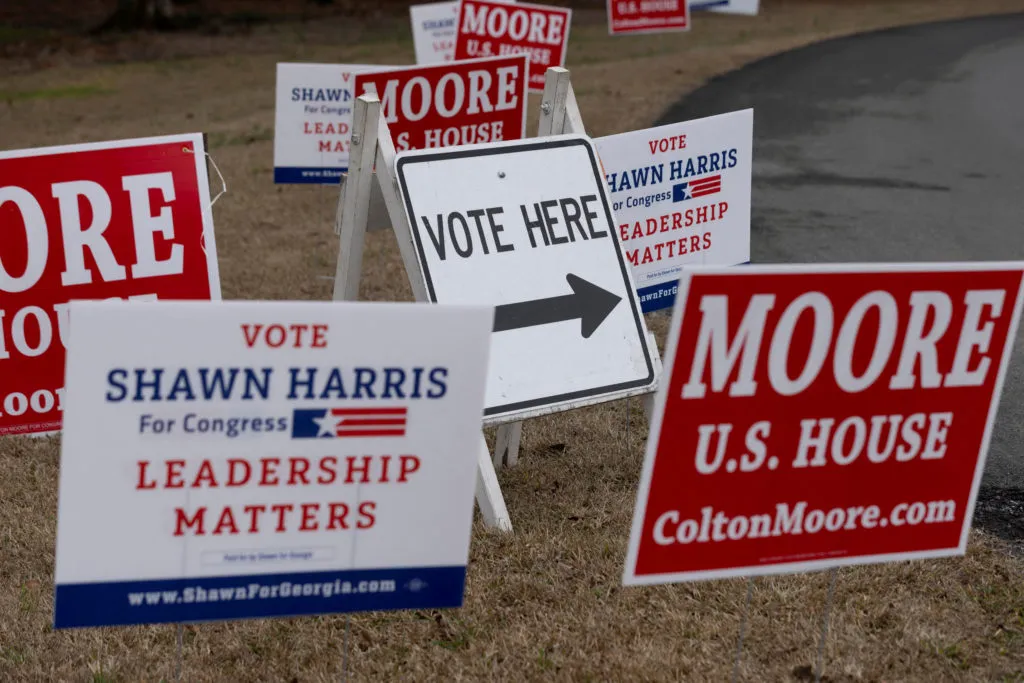
Among the candidates, Clay Fuller, a state district attorney, has gained attention due to his endorsement from Donald Trump. Fuller’s campaign has focused on traditional Republican values, positioning him as a mainline conservative and Trump loyalist. In contrast, Shawn Harris has emerged as a formidable contender, raising approximately $4.3 million for his campaign, with about $290,000 remaining in his bank as of mid-February. Harris previously garnered about 36% of the district vote in his 2024 bid against Greene, indicating a potential for strong support in the upcoming election.
Implications of the Election
The stakes of this special election extend beyond individual candidates, as a Democratic upset could significantly tighten the GOP margin in the House. If no candidate receives a majority of the votes, the top two vote-getters will advance to a runoff scheduled for April 7. This scenario underscores the importance of voter turnout and engagement, particularly in a district that saw about 378,000 votes cast in the 2024 general election, representing roughly 74% of registered voters.
Expert Perspectives
Political analysts have noted the implications of Greene’s departure and the subsequent election. Shawn Harris remarked, “The economy is very bad,” highlighting the concerns of constituents that may influence their voting decisions. He further stated, “People know that things cost more now. People know that. You don’t have to be told, you just know it, you can feel it across the board.” This sentiment reflects a growing discontent among voters that candidates must address to secure support.
As the election date approaches, the dynamics within Georgia’s 14th Congressional District continue to evolve. With a mix of candidates and significant financial backing, the special election to fill Marjorie Taylor Greene’s seat promises to be a closely watched contest. Polls are set to close at 7 p.m. ET on election day, and with approximately 521,000 registered voters in the district, the outcome remains uncertain. Details remain unconfirmed as the political landscape shifts in response to voter sentiment and candidate positioning.