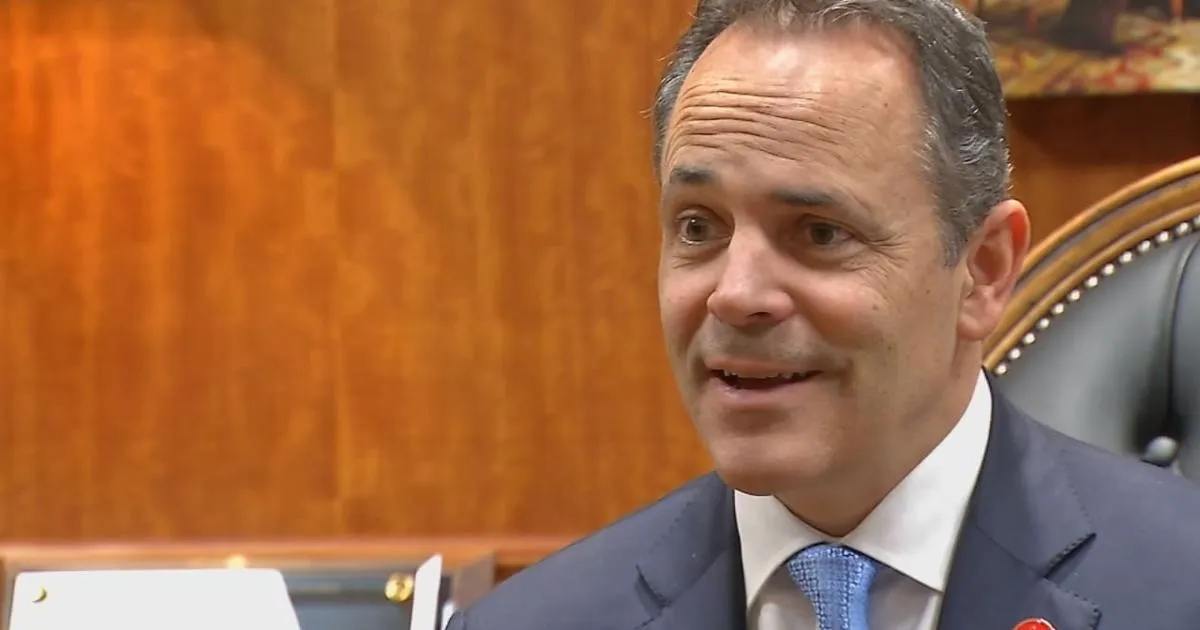
Before the recent developments, Matt Bevin, the former governor of Kentucky, was navigating a complex legal landscape following his divorce from Glenna Bevin in 2025. The expectation was that he would manage his post-political life without significant legal entanglements. However, the situation took a decisive turn when a Louisville family court found him in contempt of court for failing to meet deadlines to provide financial documents related to his adopted son, Jonah Bevin.
The court’s ruling revealed that Bevin had submitted heavily redacted financial statements, leading the judge to conclude that he did not act in ‘good faith.’ As a result, Bevin was sentenced to 60 days in jail and faced an active bench warrant for his failure to comply with court orders. This marked a stark contrast to his previous status as a political figure who had once held significant power in Kentucky.
Jonah Bevin’s emergency motion to find his father in contempt highlights the ongoing legal battle over retroactive child support, particularly for time spent in boarding schools for ‘troubled teens.’ The allegations from Jonah, including claims of abandonment in an abusive Jamaican facility at the age of 17, add a deeply personal layer to the legal proceedings.
Matt Bevin’s attorney argued that he had been in communication with Jonah’s lawyers regarding the financial documents, suggesting that there was an attempt to negotiate in good faith. However, the court’s decision indicates a serious breakdown in that communication. Angela Johnson, the presiding judge, emphasized the need for impartiality, stating, “I cannot treat Mr. Bevin or Mrs. Bevin any differently.” This underscores the gravity of the situation and the court’s commitment to uphold the law, regardless of Bevin’s previous political stature.
In the backdrop of these legal troubles, Bevin’s statement, “I love my son Jonah. I love all my children. I want what is in their best interest,” reflects a father’s perspective but contrasts sharply with the court’s findings. The judge’s remarks, “But he didn’t do that,” further illustrate the disconnect between Bevin’s intentions and the court’s assessment of his actions.
As the legal proceedings unfold, experts suggest that Bevin’s situation serves as a cautionary tale for public figures who may underestimate the consequences of their personal actions. The legal ramifications of his contempt ruling could extend beyond the immediate jail sentence, potentially impacting his reputation and future endeavors.
With the contempt ruling now in place, the focus shifts to how Bevin will navigate the next steps in this ongoing legal battle. The implications for both him and Jonah Bevin are significant, as they seek resolution in a highly publicized and emotionally charged case. The court’s insistence on detailed financial disclosures will likely play a crucial role in determining the outcome.
As this story develops, details remain unconfirmed regarding any potential appeals or further legal actions by Bevin. The unfolding drama serves as a reminder of the complexities that can arise in family law, especially when intertwined with the public lives of political figures.