The wider picture
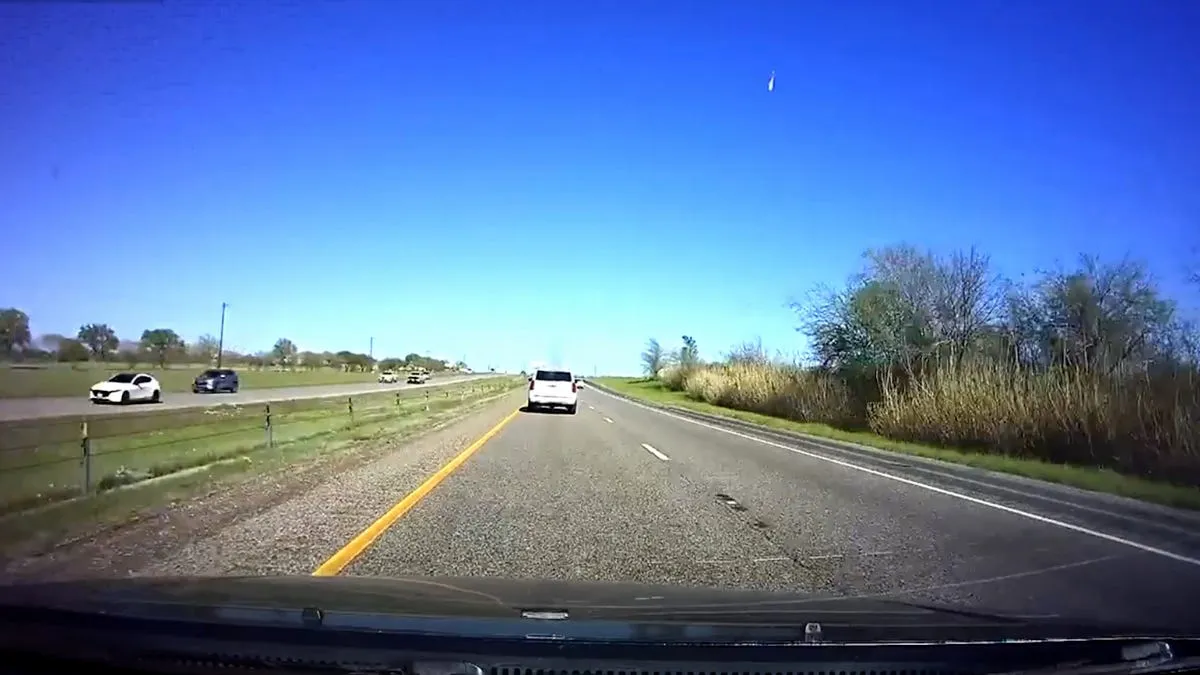
The meteorite incident in Houston occurred shortly after another meteor exploded over northeast Ohio, highlighting a surge in meteor activity across the United States. On March 21, 2026, at approximately 5:40 p.m. ET, a meteor weighing about a ton broke apart in the skies above Houston, creating a loud boom that startled residents. The meteor, which measured about 3 feet wide (1 meter) before disintegrating, was confirmed by NASA to have released energy equivalent to 26 tons of TNT as it streaked through the atmosphere.
Eyewitnesses reported over 150 sightings of the meteor across Texas, indicating its visibility was widespread. The meteor broke apart at an altitude of 29 miles (46 kilometers) above Bammel, just north of downtown Houston. As it descended, fragments of the meteorite scattered across a populated area between Willowbrook and Northgate Crossing, with one piece reportedly penetrating the roof and ceiling of a home.
Sherrie James, a local resident, recounted her experience, stating, “We heard a big boom.” Her grandson discovered a hole in their ceiling, leading her to believe it was indeed a meteorite. Such accounts reflect the immediate impact of the event on the community, as residents grappled with the reality of a celestial object landing in their midst.
NASA has taken proactive measures following the incident, releasing a ‘strewn field’ map that indicates potential areas where meteorites may have fallen. This map is crucial for recovery efforts, as it helps guide search teams to locate any surviving fragments. Despite the dramatic nature of the event, it is important to note that most of the meteor’s mass was reduced to atoms and fine droplets during the fireball, with only a small percentage surviving to reach the ground.
Officials have emphasized the rarity of such occurrences, but the recent uptick in meteor sightings raises questions about whether this is an isolated incident or part of a broader trend. The meteorite incident in Houston follows closely on the heels of another meteor sighting in northeast Ohio just days prior, suggesting a potential increase in meteor activity.
As the dust settles, experts continue to analyze the data collected from the event. The fireball was visible on lightning mapping instruments aboard NOAA’s GOES satellites, providing valuable information for researchers studying meteor behavior. Observers are keenly interested in what this means for future meteor sightings and the potential for similar incidents in populated areas.
In the aftermath of the Houston meteorite event, officials and scientists alike are preparing for the next steps. Recovery efforts will likely focus on locating any remaining fragments, while public interest in meteor phenomena may lead to increased educational outreach about the nature of meteors and how to respond in the event of future occurrences. The community’s response to this incident will undoubtedly shape how similar events are perceived and managed in the future.