Reaction from the field
The upcoming Artemis II mission, scheduled for April 6, 2026, represents a significant milestone in human space exploration as it aims to break the record for the farthest distance from Earth traveled by any human crew. This mission will not only push the boundaries of human presence in space but also serve as a crucial test flight ahead of future moon landings. NASA’s live stream of the event is expected to draw significant global attention, highlighting the agency’s commitment to transparency and public engagement in its ambitious lunar campaign.
The Artemis II crew comprises four NASA astronauts: Reid Wiseman, Victor Glover, Christina Koch, and Jeremy Hansen. They will enter the lunar sphere of gravitational influence at approximately 12:41 a.m. EDT on April 6, 2026, before reaching their closest approach to the Moon at 7:02 p.m. EDT, flying at an altitude of 4,070 miles above the lunar surface. This trajectory will allow the crew to conduct lunar observations for about six hours, providing invaluable data for future missions.
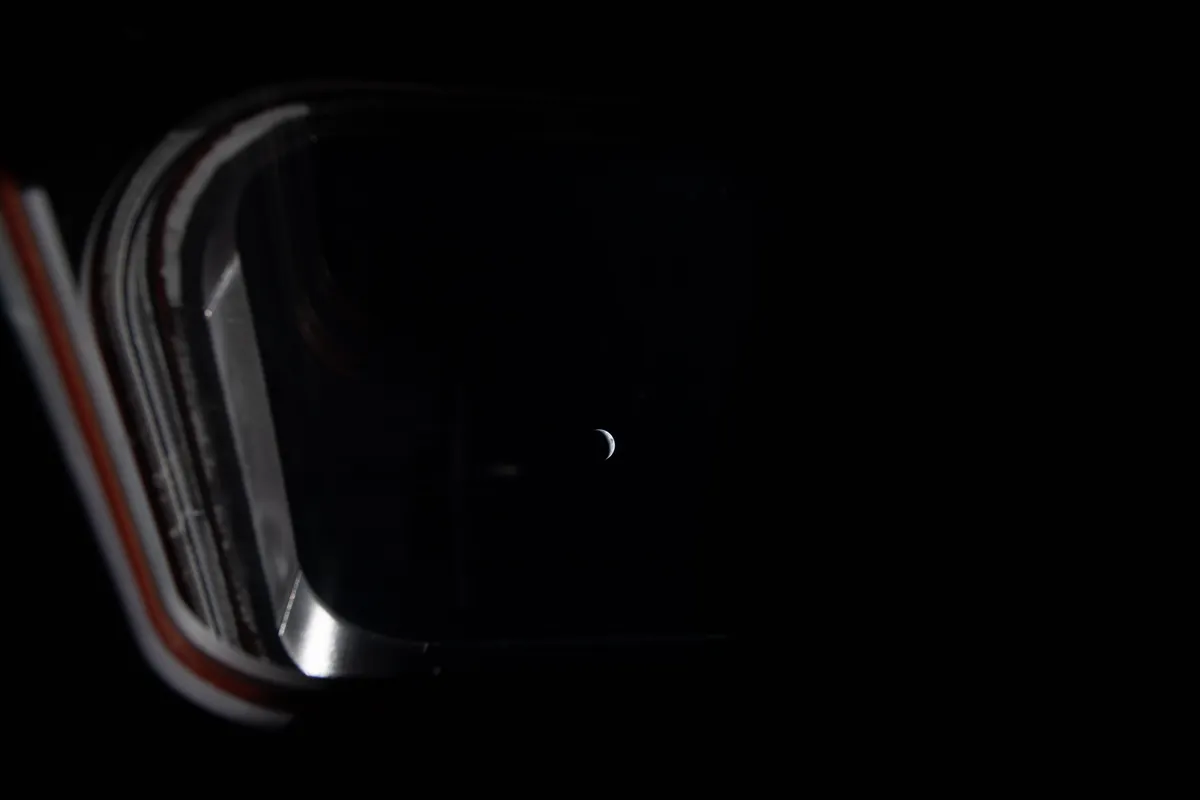
Historically, the Artemis II mission will surpass the Apollo 13 mission, which previously held the record for the farthest distance from Earth at 248,655 miles. Artemis II is projected to reach a distance of 252,760 miles from Earth, marking a new chapter in human spaceflight. As the crew embarks on this journey, they will witness a mostly dark moon, presenting a unique opportunity to observe flashes of light from meteoroids striking the lunar surface.
NASA’s live stream will commence at 1 p.m. EDT on April 6, allowing viewers worldwide to witness the mission’s critical phases. The Orion spacecraft is expected to reenter Earth’s atmosphere on April 10, 2026, following its lunar flyby. This mission is part of NASA’s broader Artemis campaign, which aims to establish a permanent presence on the lunar south pole, paving the way for future exploration of Mars.
During the flyby, the crew will experience a communication blackout lasting approximately 40 minutes, a challenge that underscores the complexities of deep space exploration. As NASA prepares for this mission, the agency emphasizes its commitment to returning astronauts to the lunar surface for the first time since the Apollo missions concluded in 1972. This ambitious goal reflects a renewed interest in lunar exploration and the potential for scientific discovery.
NASA has stated, “During the eclipse, the sun will be hidden from view as it moves behind the moon from the perspective of Orion.” This phenomenon will not only enhance the crew’s observational capabilities but also adds an element of excitement to the mission. As the Artemis II mission approaches, the anticipation builds among space enthusiasts and the scientific community alike.
As the world gears up for this historic event, the excitement surrounding the Artemis II mission is palpable. The live stream will serve as a platform for education and inspiration, inviting the public to engage with the wonders of space exploration. While the mission is set to break records and conduct groundbreaking research, details remain unconfirmed regarding the specific scientific objectives that will be prioritized during the lunar observations.
In summary, the Artemis II mission represents a pivotal moment in NASA’s efforts to explore the Moon and beyond. With the live stream providing a window into this extraordinary journey, the world will witness history in the making as humanity continues to reach for the stars.