What is the significance of the upcoming NASA satellite crash?
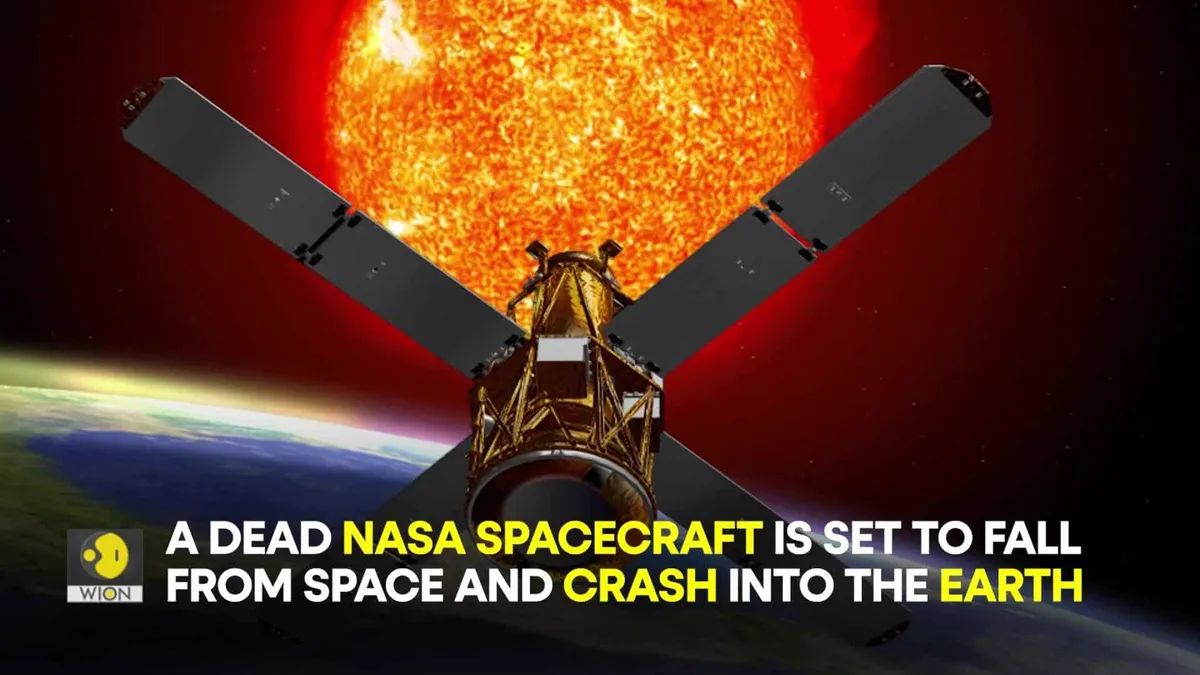
The Van Allen Probe A, a NASA satellite, is expected to crash back to Earth on March 10, 2026, at approximately 7:45 p.m. EDT. This event raises the central question: how safe is this re-entry for people on the ground? According to NASA, the chance of harm coming to anyone on Earth is approximately 1 in 4,200, which indicates a relatively low risk for the general population.
Details about the Van Allen Probe A
The Van Allen Probe A, which weighs around 1,323 pounds (600 kg), was launched on August 30, 2012, with the mission to study Earth’s radiation belts. It operated alongside its twin, Van Allen Probe B, until both probes were deactivated in 2019 when they ran out of fuel. The initial prediction for the satellite’s re-entry was set for 2034, but this timeline was revised due to increased atmospheric drag caused by solar activity.
Monitoring the re-entry
NASA, in collaboration with the U.S. Space Force, is actively monitoring the re-entry of the Van Allen Probe A. They have stated that they will continue to update predictions as the event approaches. Mark Matney, a NASA official, emphasized that “the odds that you will be hit are one in several trillion, so quite low for any particular person.” This statement aims to reassure the public regarding the safety of the re-entry.
Potential debris and safety measures
While most of the satellite is expected to burn up upon re-entry, some components may survive the descent. The risk of debris hitting populated areas is mitigated by the fact that about 71% of Earth’s surface is covered by water. This geographical factor significantly reduces the likelihood of debris impacting land, further enhancing safety measures.
Background on the Van Allen Probes
The Van Allen Probe A and its twin were designed to study the Van Allen belts, which are regions of charged particles trapped by Earth’s magnetic field. Their findings have contributed to a better understanding of space weather and its effects on satellite operations and communications on Earth.
What remains uncertain?
Despite the low risk associated with the satellite’s re-entry, details remain unconfirmed regarding the exact location where any debris may land. The uncontrolled nature of the re-entry adds an element of unpredictability, which NASA and the U.S. Space Force are closely monitoring.
Looking ahead
As the re-entry date approaches, NASA will continue to provide updates on the situation. The event serves as a reminder of the complexities involved in space missions and the importance of monitoring space debris to ensure public safety. The Van Allen Probe A’s re-entry is not only a significant moment for NASA but also a critical instance of how space exploration intersects with life on Earth.