The wider picture
The No Kings protests, which began in June 2025, have rapidly evolved into a significant movement in the United States, particularly in New York City. The name ‘No Kings’ stems from the organizers’ assertion that President Donald Trump governs more like a monarch than a democratically elected leader. This sentiment resonates with many who feel that the current administration embodies chaos, corruption, and cruelty.
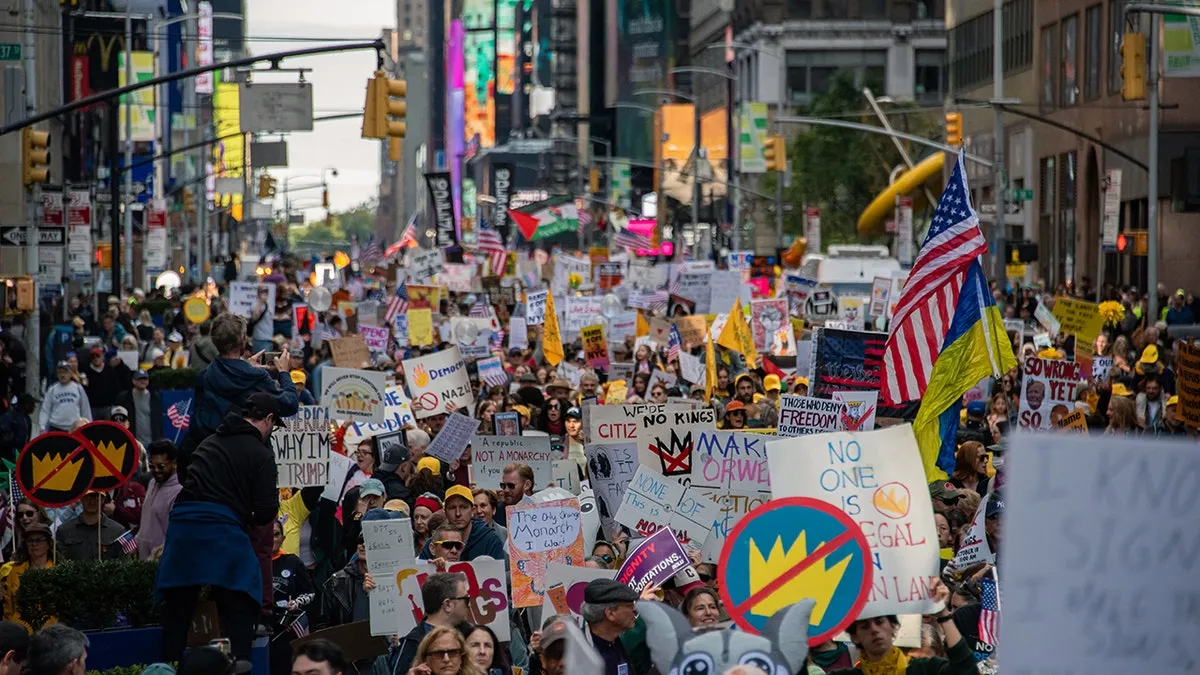
On March 28, 2026, the movement will reach a critical juncture as over 3,100 protests are scheduled nationwide, with New York City expected to be a focal point. The NYC protest will commence at 2 p.m. ET, starting at 7th Ave and Central Park South, and is anticipated to draw millions of participants, echoing the last major gathering in October 2025, which saw around 300,000 New Yorkers rallying in Times Square and Midtown Manhattan.
Organizers of the No Kings protests have made it clear that they view Trump’s presidency as an affront to democratic values. “The president thinks his rule is absolute. But in America, we don’t have kings, and we won’t back down against chaos, corruption, and cruelty,” said a representative from the organizing committee. This statement encapsulates the frustration and determination of those involved in the movement.
Since the inaugural protest in June 2025, the No Kings movement has gained traction, fueled by a growing discontent with the political landscape. The protests have attracted a diverse coalition of artists, activists, and political figures, including notable names like Pussy Riot, Bruce Springsteen, Joan Baez, Jane Fonda, and Bernie Sanders, all of whom have lent their voices to the cause.
The last protest in October 2025 was a testament to the movement’s momentum, as it brought together a significant number of participants who shared a common goal: to challenge what they perceive as an authoritarian regime. The upcoming protest is expected to not only match but exceed that turnout, reflecting the escalating urgency felt by many Americans.
As the date approaches, anticipation builds among participants and observers alike. The No Kings protests are not merely a reaction to Trump’s presidency; they symbolize a broader struggle for democratic principles and accountability in governance. The movement’s growth indicates a collective yearning for a return to democratic norms and a rejection of monarchical tendencies.
Details remain unconfirmed regarding the specific measures that law enforcement will take to manage the anticipated crowds, but the city is preparing for a significant turnout. As millions prepare to take to the streets, the No Kings protests will undoubtedly continue to shape the national conversation around democracy and leadership in America.