Recent months have seen several rounds of U.S.-brokered negotiations fail to bring the warring parties closer to an agreement to stop the fighting. As Orthodox Easter approaches, Russian President Vladimir Putin declared a 32-hour ceasefire, intended to last from 4 p.m. on Saturday until the end of Sunday. However, the holiday was overshadowed by accusations from both sides regarding violations of this ceasefire.
Ukraine’s armed forces reported a staggering 2,299 ceasefire violations by 7 a.m. on Sunday, while Russia’s Defense Ministry claimed 1,971 violations occurred on the same day. These figures highlight the ongoing tensions and the challenges of maintaining peace, even during significant religious observances.
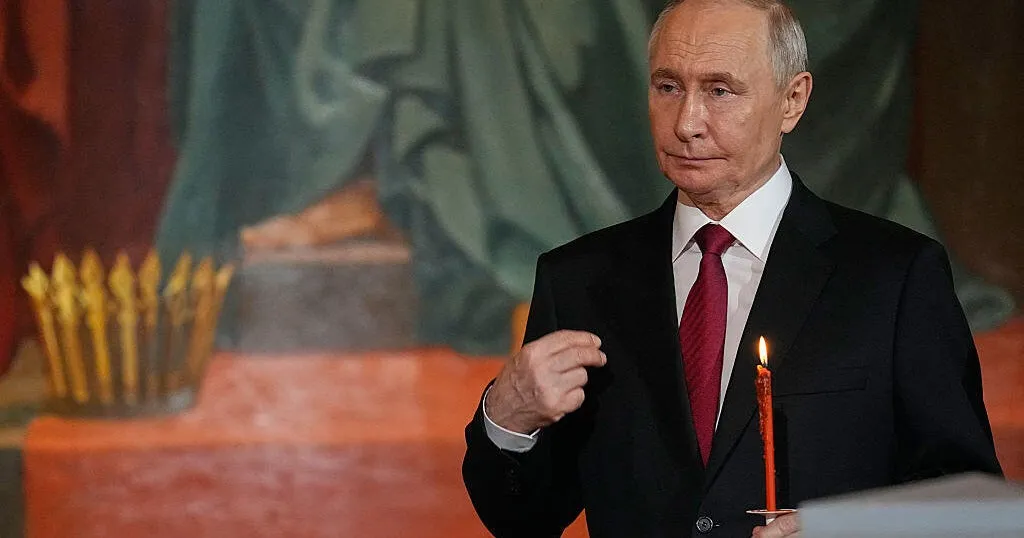
Putin attended the Easter vigil at the Cathedral of Christ the Saviour, where the divine service was led by Patriarch Kirill of Moscow and All Russia. In his remarks, Putin expressed hope that “the great holiday of Easter fills the hearts of millions with genuine joy and faith in the triumph of life.” His sentiments, however, seem to contrast sharply with the realities on the ground.
In response to the ceasefire violations, Kremlin spokesperson Dmitry Peskov stated, “Sustainable peace can come when we secure our interests and achieve the goals we set from the very start.” This reflects a broader narrative where both sides are entrenched in their positions, complicating any potential for reconciliation.
Meanwhile, Irena Bulhakova, a Ukrainian official, remarked, “Good triumphs over darkness, and we hope for that very much,” indicating a desire for peace amidst the ongoing conflict. However, the stark reality of the reported ceasefire violations casts doubt on such hopes.
The International Boxing Association also extended greetings for Orthodox Easter to athletes and fans, emphasizing the holiday’s significance beyond the political turmoil. Yet, the juxtaposition of festive greetings against a backdrop of conflict raises questions about the feasibility of peace.
Details remain unconfirmed regarding the exact terms of the ceasefire and whether they were accepted by Ukrainian President Volodymyr Zelenskyy. Observers are left to ponder the implications of these violations on future negotiations and the potential for lasting peace.
As the world watches, the Orthodox Easter celebrations in both Russia and Ukraine serve as a poignant reminder of the ongoing strife and the complex interplay of faith and conflict in the region.