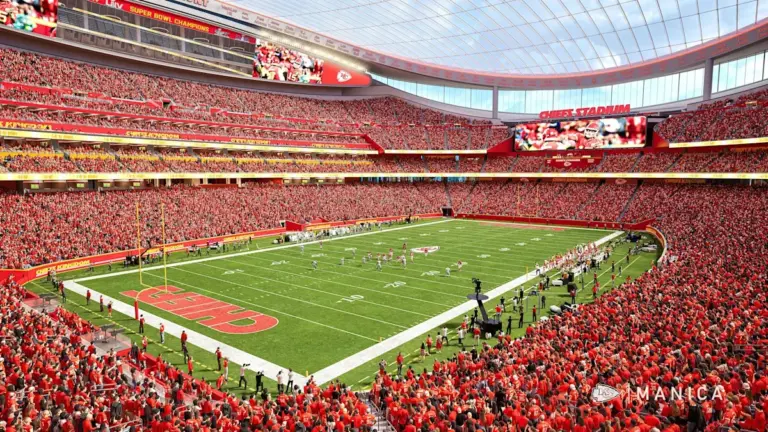
The highly anticipated friendly match between Portugal and Mexico is set to take place on March 28, 2026, at the newly renovated Estadio Banorte in Mexico City. This match serves as a crucial preparation for both teams ahead of the 2026 World Cup, with an expected attendance of nearly 100,000 fans.
Renovations at the stadium have increased its capacity from 83,000 to 87,500 spectators, providing a fitting venue for this international clash. The match will kick off at 9 p.m. ET / 6 p.m. PT, marking a significant moment for the stadium, which has been a historical site for World Cup matches in 1970 and 1986.
However, the match will see the absence of key players. Cristiano Ronaldo will miss the game due to injury, while Mexico will be without regulars such as Edson Álvarez and Santiago Gimenez. Despite these setbacks, Álvaro Fidalgo is set to make his debut for Mexico, adding a layer of excitement for local fans.
Historically, Mexico has not lost at Estadio Azteca since 2013, a statistic that adds pressure on the visiting Portuguese team. The match will be a test for the stadium’s new features, including a state-of-the-art sound system with 250 speakers, ensuring an electrifying atmosphere.
Félix Aguirre, involved in the stadium’s renovation, expressed the challenges faced during the project, stating, “It’s true that I’ve had trouble sleeping thinking about the project and making sure it’s the best it can be.” He emphasized the importance of maintaining the stadium’s essence, saying, “Another thing we wanted was for it not to lose its soul.”
Both teams are expected to employ strategic formations, with Mexico likely opting for a 4-3-3 setup and Portugal favoring a 4-2-3-1 formation. This tactical battle will be closely watched by fans and analysts alike.
As the match approaches, observers are eager to see how the teams adapt to the absence of their star players and how the newly renovated stadium performs under pressure. Details remain unconfirmed regarding the final lineups, but the excitement surrounding this fixture is palpable.