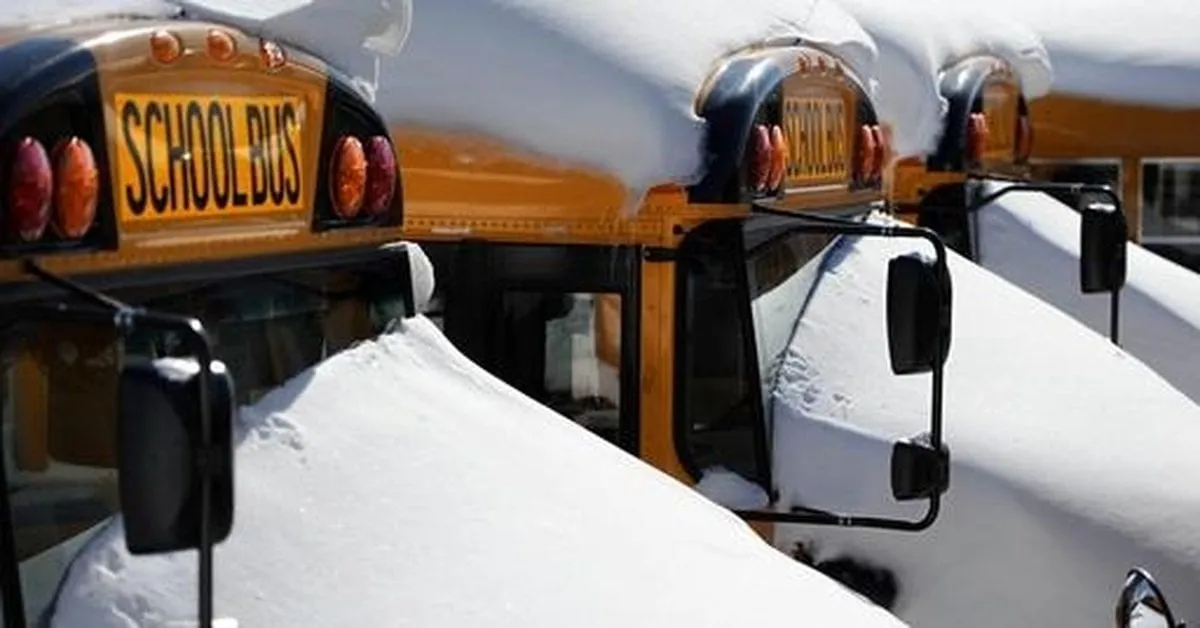
On March 17, 2026, winter weather conditions significantly disrupted education across Kentucky, leading to multiple school closures and delays. The adverse weather forced several districts to adapt quickly, impacting thousands of students and their families.
Clay County Schools opted for a remote learning day, while Fayette County Public Schools declared the day a non-traditional instruction (NTI) day. This decision allowed students to continue their education despite the challenging weather conditions. Clark County Public Schools announced closures as early as 6:30 a.m., indicating the severity of the situation.
Several counties in Kentucky experienced cancellations or delays, including Bath, Bell, Carter, Clay, Estill, Floyd, Harlan, Jackson, Knox, Lawrence, Lee, Leslie, Lewis, Mason, McCreary, Menifee, Middlesboro Independent, Montgomery, Nicholas, Owsley, Powell, Robertson, Rockcastle, Rowan, Walnut Hill Day School, Wolfe, and Woodford. The widespread nature of these closures highlights the impact of winter weather on the educational landscape.
In addition to the disruptions in Kentucky, neighboring states also faced challenges due to lingering snow and icy roads. Ohio districts reported similar disruptions, while Minnesota schools delayed start times or switched to e-learning due to a blizzard. Western North Carolina schools moved to remote learning or closed entirely due to snow, showcasing a regional pattern of weather-related school closures.
Weather reports indicated that northern Michigan counties received up to six inches of snow, with two to three inches expected in Michigan on the same day. In Asheville, temperatures dropped to 39 degrees before the snow, with a low of 19 degrees overnight. These conditions contributed to the decision-making process for school administrators across the affected areas.
Yancey County Schools addressed potential connectivity issues, stating, “Our principals and teachers will work with students and families if their WiFi is not in service at home due to the weather.” This commitment reflects the ongoing challenges that schools face in ensuring educational continuity during adverse weather conditions.
The events of March 17, 2026, will join a long list of weather-induced school closures that test the adaptability of America’s education system. As districts navigate these challenges, the emphasis on remote learning and flexible instructional methods becomes increasingly important.
Reaction from the field
Details remain unconfirmed regarding the long-term effects of these closures on student performance and engagement. However, the immediate impact on families and educators is evident as they adapt to the changing circumstances brought about by winter weather.