The wider picture
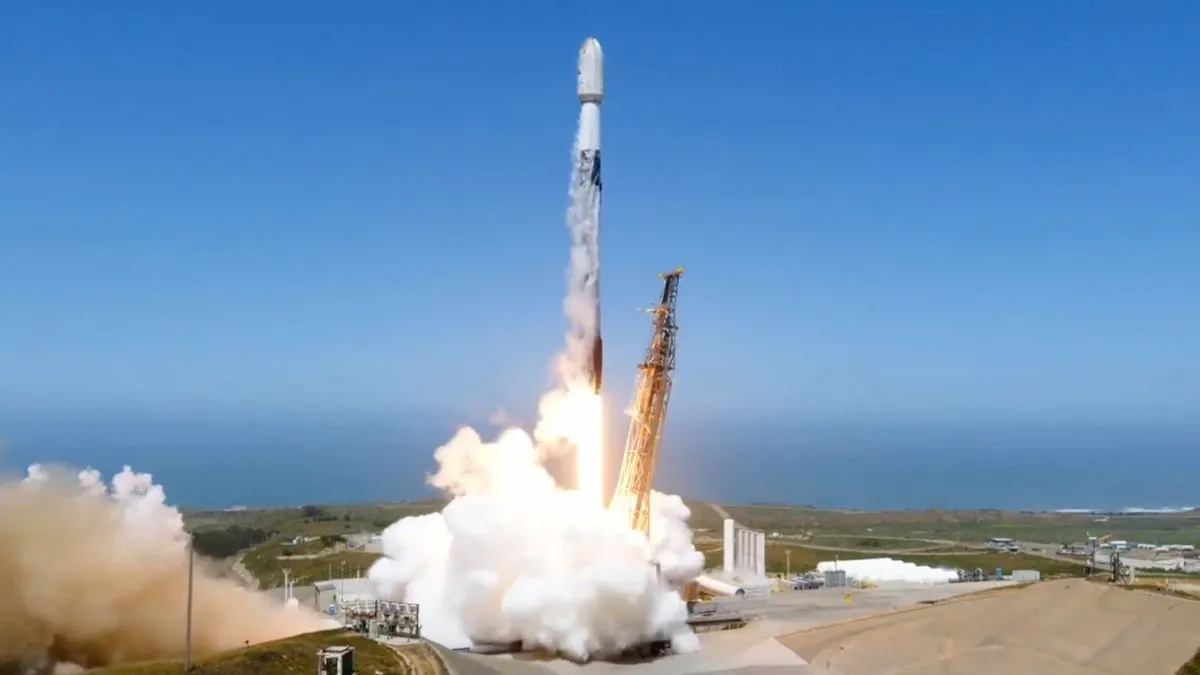
SpaceX, the commercial spaceflight company founded by Elon Musk in 2002, has become a dominant force in the aerospace sector. With a mission to revolutionize space travel and satellite deployment, SpaceX has consistently pushed the boundaries of technology and innovation. Today, the company is set to launch a Falcon 9 rocket from Vandenberg Space Force Base in California, marking yet another milestone in its ongoing efforts to expand its Starlink internet satellite constellation.
The Falcon 9 rocket is scheduled to lift off today, March 19, 2026, with a launch window opening at 2:48 p.m. PT. This mission aims to deploy 25 Starlink satellites into low-Earth orbit, contributing to the growing network that currently boasts over 10,000 satellites in space. The launch will take place from Space Launch Complex 4-East (SLC-4E), a site that has been operational since 1941 and has hosted numerous significant missions.
Residents in Santa Barbara, Ventura, and San Luis Obispo counties may have the opportunity to witness the launch, as it could be visible from various locations across these areas. Additionally, sonic booms may be heard following liftoff, a phenomenon that often accompanies the return of rocket boosters to Earth. The Falcon 9’s booster is expected to land on a SpaceX drone ship stationed in the Pacific Ocean, a routine part of the company’s strategy to recover and reuse rocket components.
SpaceX’s Starlink project aims to provide high-speed internet access to underserved and remote areas around the globe. With its ambitious goal of deploying thousands of satellites, the company is not only enhancing connectivity but also positioning itself as a leader in the satellite internet market. As the launch approaches, anticipation builds among tech enthusiasts and industry observers alike, eager to see how this latest batch of satellites will enhance the Starlink network.
Elon Musk’s vision for SpaceX extends beyond just satellite internet; it encompasses a broader ambition to make space travel more accessible and sustainable. The successful deployment of these satellites today will further solidify SpaceX’s reputation as a pioneer in the commercial space sector. Observers are keenly watching how this mission will unfold and what it means for the future of satellite technology.
As the countdown to launch continues, SpaceX remains focused on its objectives. The company has faced challenges in the past, but its resilience and commitment to innovation have allowed it to overcome obstacles and achieve remarkable milestones. Today’s launch is a testament to that spirit, showcasing the capabilities of the Falcon 9 rocket and the potential of the Starlink program.
Looking ahead, the successful deployment of these 25 satellites is expected to enhance the overall performance of the Starlink network, providing improved service to users worldwide. SpaceX’s ongoing efforts in this area are likely to have significant implications for the future of internet connectivity, particularly in regions where traditional infrastructure is lacking.
As the launch time approaches, excitement is palpable among SpaceX’s team and the broader space community. The successful execution of this mission will not only contribute to the expansion of the Starlink network but also reaffirm SpaceX’s position as a leader in the rapidly evolving landscape of commercial spaceflight.