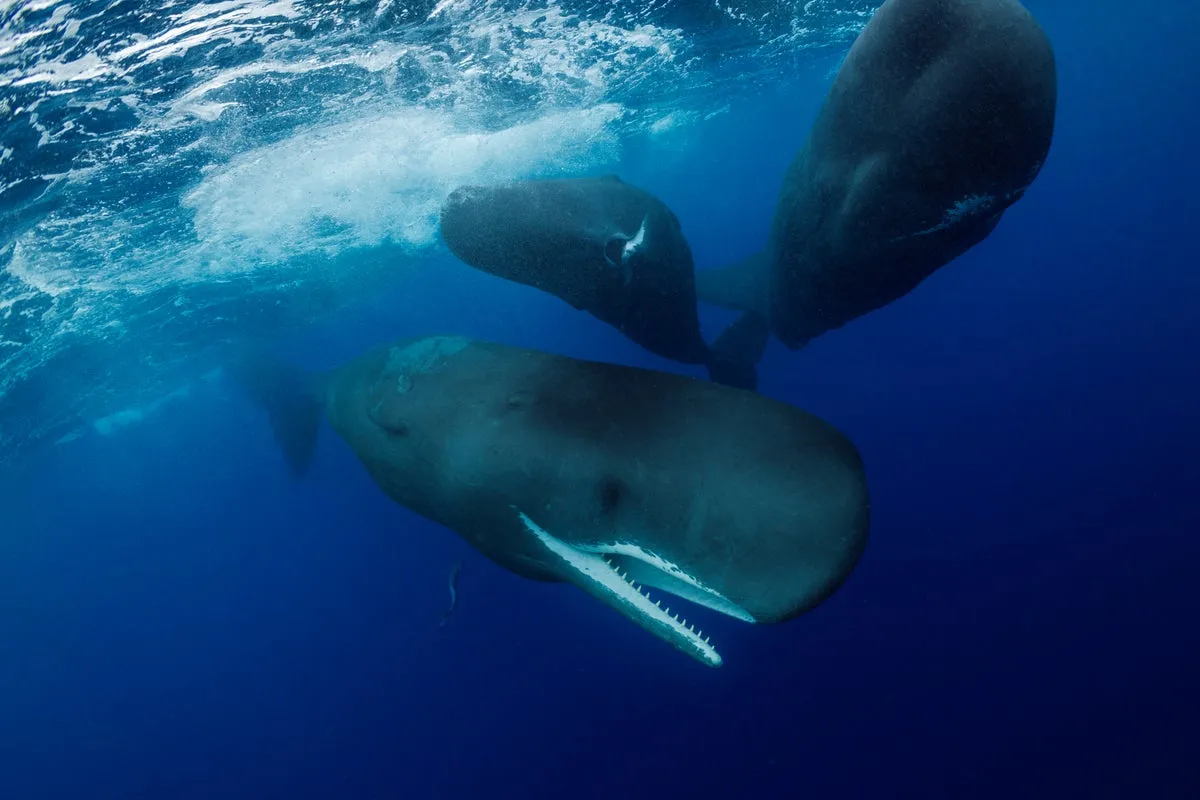
“Sperm whales are known to socialize, but scientists were stunned when they saw a group of sperm whales gather as one of them gave birth.” This striking observation was made by the Project CETI team during a remarkable event off the coast of Dominica on July 8, 2023.
The birth occurred at precisely 11:45:45 local time, marking a significant moment for marine biologists who have been studying this particular unit of sperm whales since 2005. The event lasted approximately 34 minutes, from the first sighting of the calf’s flukes to the completion of the birth.
During the birth, the newborn calf surfaced for the first time just two minutes later at 11:47. The unit involved in this extraordinary event consisted of 11 sperm whales, including 8 adults and 3 calves, showcasing the social structure and support within the group.
The mother, identified as Rounder, was observed being assisted by other group members, who frequently lifted the newborn out of the water. This behavior highlights the communal care that is often seen in cetacean species, particularly among sperm whales.
Project CETI has documented this sperm whale unit in 873 unique clusters since their studies began, providing a wealth of data on their social interactions and behaviors. The birth event adds a new layer of understanding to the complex social dynamics of these marine mammals.
As researchers continue to analyze the footage and data collected during the encounter, they hope to gain further insights into the reproductive behaviors and social structures of sperm whales. The implications of such findings could enhance conservation efforts and deepen our understanding of marine ecosystems.
Details remain unconfirmed regarding the long-term health of the newborn calf and the dynamics of the group following this significant event. However, the observations made during the birth have already sparked interest and excitement within the scientific community.