Introduction to Solar Eclipses
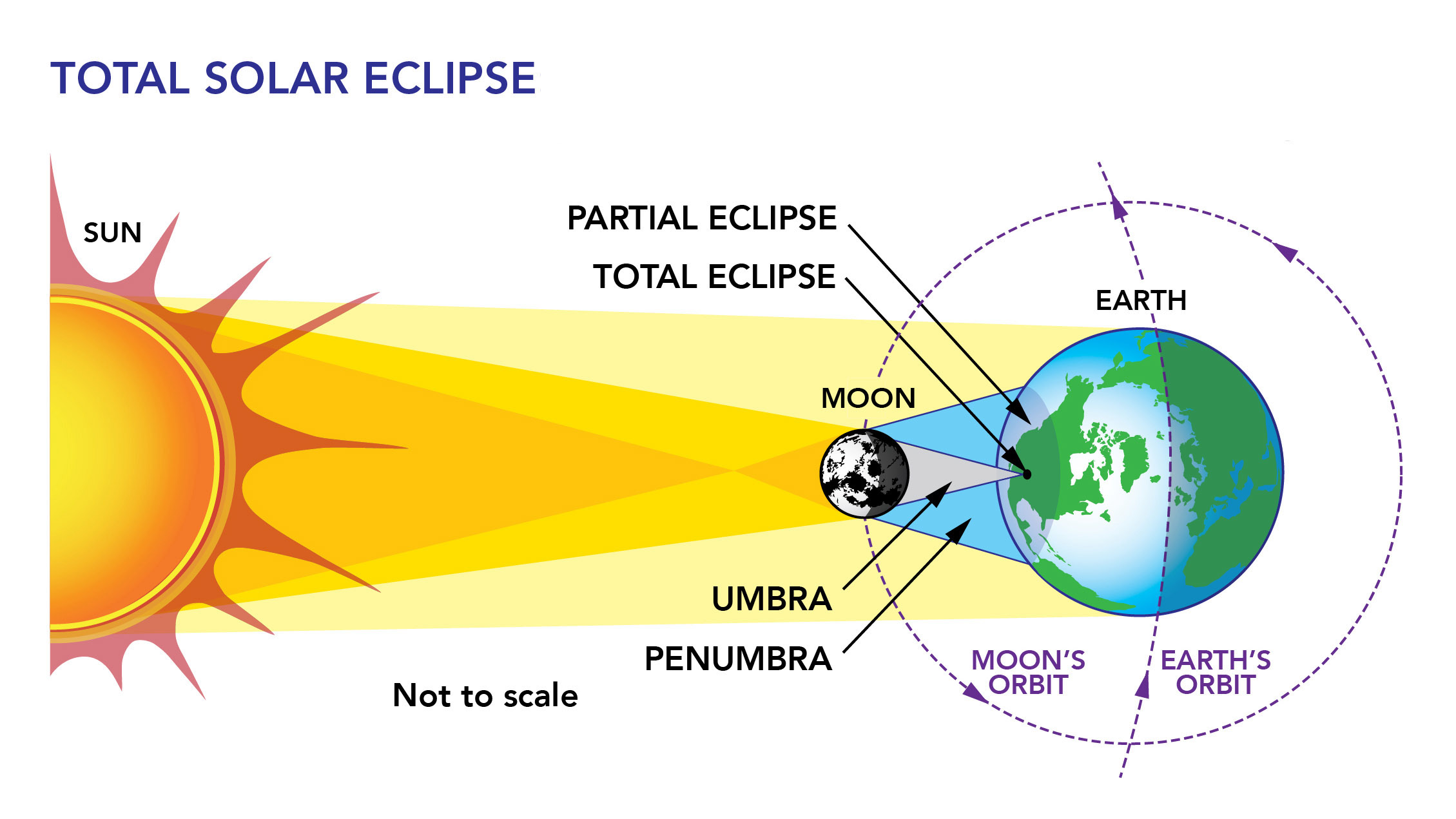
Solar eclipses are remarkable celestial events that occur when the Moon passes between the Earth and the Sun, completely or partially blocking the sunlight. They hold significant scientific importance, providing opportunities for astronomical research and sparking public interest in space science. Given their rarity and the awe they inspire, solar eclipses attract millions of viewers worldwide, reminding us of the grandeur of our solar system.
Types of Solar Eclipses
There are three primary types of solar eclipses: total, partial, and annular. A total solar eclipse occurs when the Moon fully covers the Sun, casting a shadow on Earth and resulting in complete darkness for a brief period. A partial solar eclipse happens when only part of the Sun is obscured by the Moon. An annular eclipse occurs when the Moon is too far from Earth to completely cover the Sun, resulting in a ‘ring of fire’ effect around the Moon.
Recent Solar Eclipses
On April 20, 2023, a hybrid solar eclipse captivated viewers across Australia and parts of Southeast Asia. This rare type of eclipse transitioned between total and annular phases, giving observers a unique opportunity to witness different eclipse forms in a single event. The next significant solar eclipse will occur on August 12, 2026, which will be visible from Spain and parts of the Arctic, marking a momentous occasion for eclipse enthusiasts.
Scientific Significance
Solar eclipses are not just beautiful spectacles; they also have crucial scientific implications. They have been instrumental in confirming theories in astrophysics, such as Einstein’s theory of general relativity. Observations made during eclipses have enabled scientists to study the solar corona, the outer atmosphere of the Sun, which is usually hidden from view by the Sun’s bright light.
Conclusion
Solar eclipses continue to capture the imagination of scientists and the public alike. As we look forward to upcoming eclipses, they remind us of our place in the universe and the astronomical phenomena that can be observed right here on Earth. For those interested in astronomy, following these celestial events is essential, as each eclipse provides new data and inspires future generations of scientists and stargazers.