Introduction to Pi
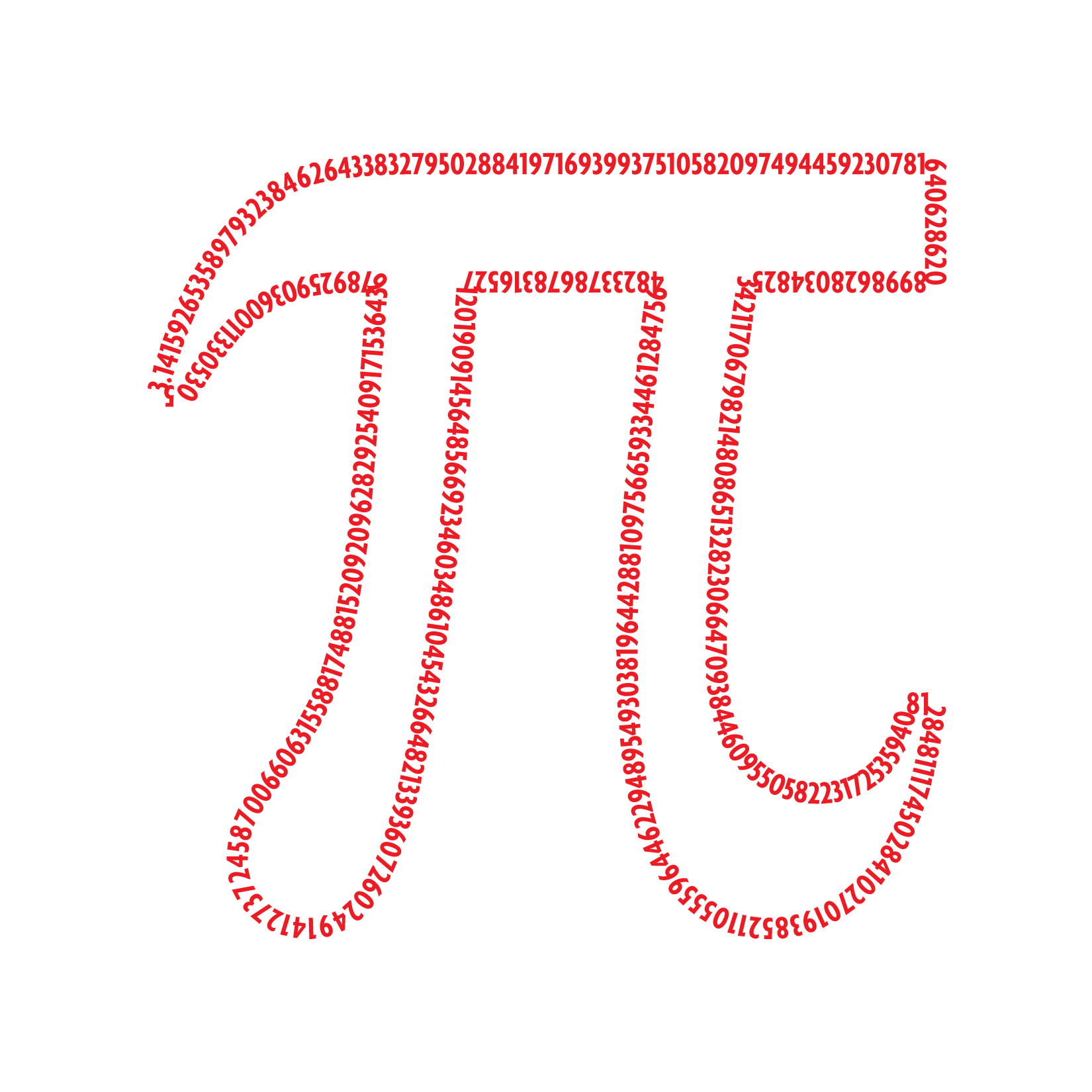
Pi (π), approximately equal to 3.14159, is one of the most important mathematical constants. It represents the ratio of a circle’s circumference to its diameter in Euclidean geometry. Pi’s importance transcends not only mathematical calculations but also fields including physics, engineering, and computer science. As we delve into this remarkable constant, we uncover its applications and significance in various domains.
Historical Context
The concept of pi has been known for centuries, with its first recorded use dating back to ancient civilizations. The Babylonians approximated pi to 3.125, while the ancient Egyptians used 3.1605. Over time, mathematicians from Archimedes in Greece to modern day have refined its value with greater precision. Notably, the symbol π was first used in 1706 by the Welsh mathematician William Jones, becoming standard notation in subsequent mathematical literature.
Pi in Modern Mathematics
In today’s mathematics, pi is used extensively in calculations involving circles, arcs, and spheres. Its most common approximation is 3.14, though it is known to have an infinite number of decimal places without repeating. This property makes it a fascinating subject in mathematical research, inspiring various algorithms for calculating its digits. Recent advancements have led to pi being calculated to over 31 trillion digits as of 2021, a remarkable achievement that showcases the capabilities of modern computing.
Applications of Pi Beyond Mathematics
Beyond theoretical understanding, pi plays a crucial role in practical applications. In engineering, it is essential for designing components in various mechanical systems. In physics, pi appears in formulas dealing with waves, circles, and oscillations. Moreover, in computer science, pi is frequently encountered in algorithms and data structures that involve geometric computations or digital signal processing.
Conclusion: The Significance of Pi
The enduring relevance of pi cannot be overstated. Its implications stretch across several disciplines and continue to inspire mathematicians and scientists alike. As we forge ahead, the exploration of pi remains an exciting frontier, encouraging innovations in calculation techniques and new mathematical theories. Understanding pi is not just about grasping a number; it embodies the intersection of art, science, and thought, proving vital to the very fabric of our analytical world.