Introduction
The periodic table of elements is one of the most significant achievements in science, providing a systematic organisation of chemical elements based on their atomic number, electron configuration, and recurring chemical properties. Its relevance is evident not just in chemistry but also in various fields including biology, physics, and environmental science. As we continue to expand our understanding of the universe and the materials within it, recent developments regarding the periodic table have garnered attention, making this iconic table as relevant as ever.
Recent Developments in the Periodic Table
In recent months, scientists have focused on the discovery of new elements that could potentially extend the periodic table. Research in this area is concentrated on superheavy elements—those with atomic numbers greater than 103—that are theoretically predicted but have yet to be isolated and studied extensively. As of now, elements up to atomic number 118 (Oganesson) are officially recognised, but pursuits to discover elements 119 and beyond are ongoing. This could enhance our understanding of chemical properties and the structure of matter itself.
The Role of the Periodic Table in Education
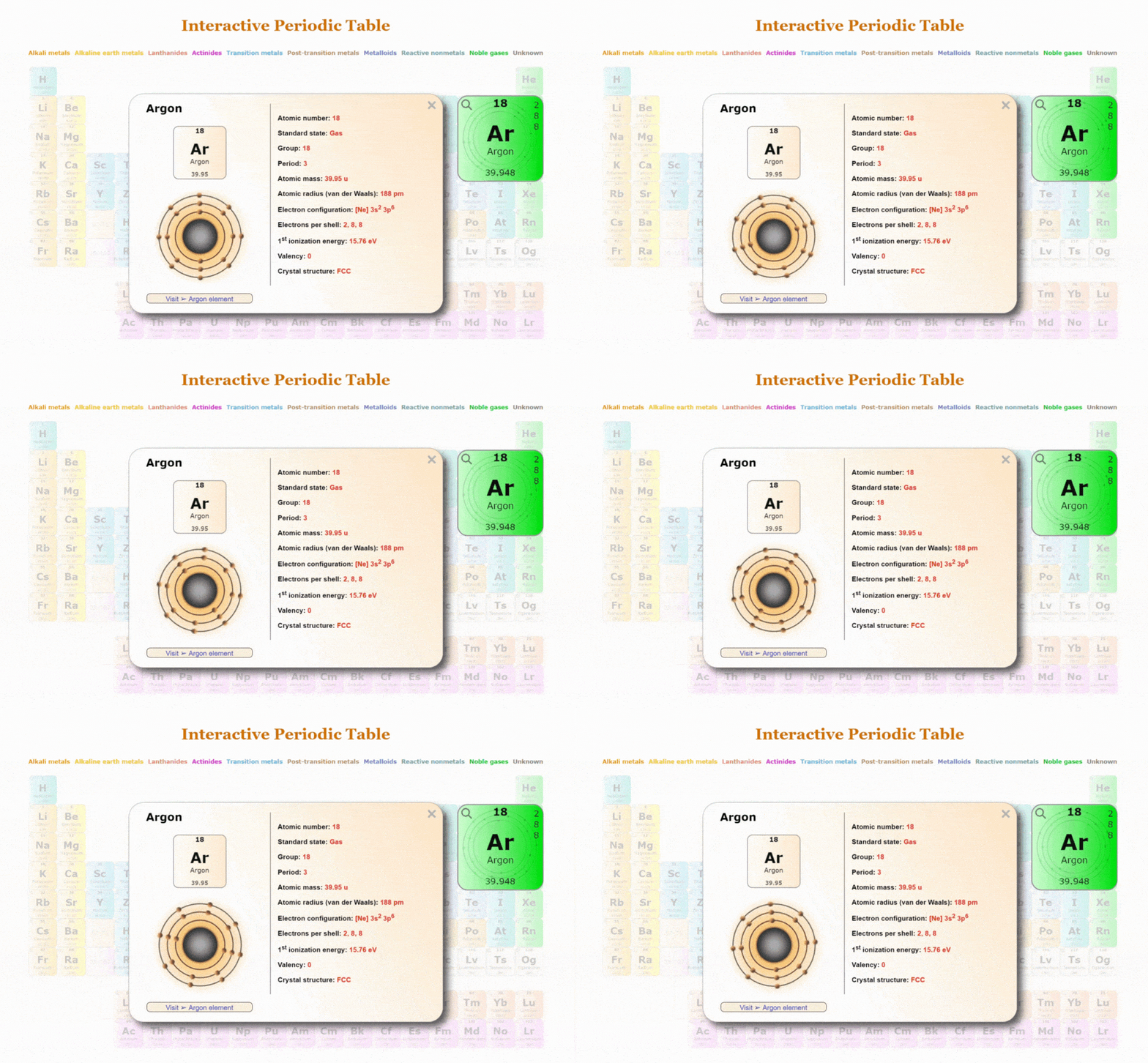
With the upcoming academic year, educators are re-evaluating how they approach teaching the periodic table in schools. The approach highlights not just memorisation but an integrated understanding of chemistry that relates the elements to their applications and significance in everyday life. Resources have become more varied, with online platforms offering interactive periodic tables which help engage students effectively. The availability of information has expanded, placing a greater emphasis on the historical context of the table as well as its modern applications.
Conclusion
The periodic table is more than just a collection of symbols; it’s a dynamic representation of the elements that constitute the physical world. As we discover new elements and learn more about existing ones, the periodic table continues to evolve. It plays an essential role in education and scientific research, enlightening students and researchers alike about the complexities of matter. As we move forward, the implications of a more comprehensive periodic table could significantly enhance multiple disciplines, offering a clearer understanding of the universe and fostering innovations in technology and materials science.