Introduction
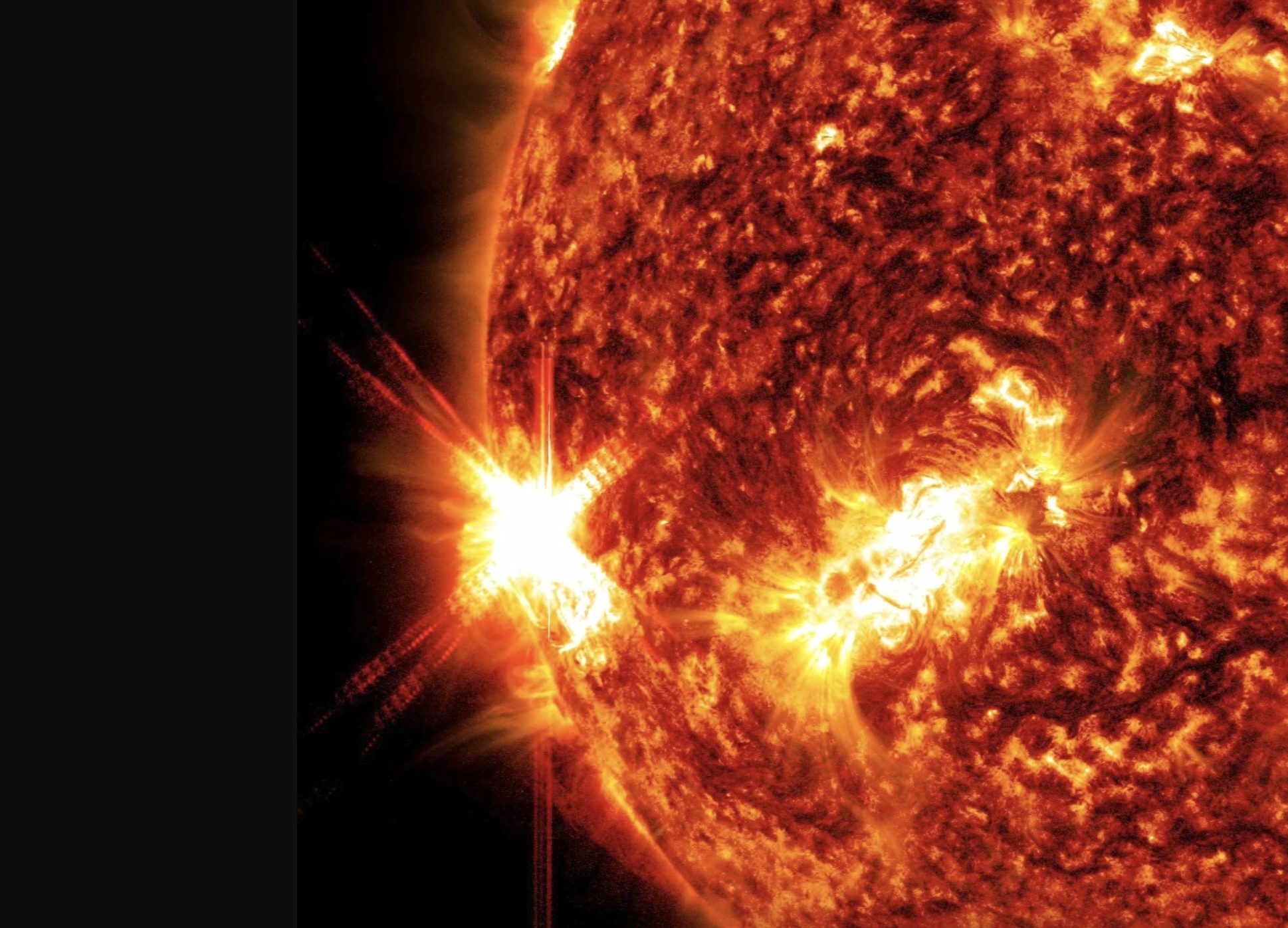
Sun solar flares are one of the most significant phenomena occurring in our solar system. These sudden bursts of radiation on the sun’s surface can release more energy than billions of hydrogen bombs exploding simultaneously. Understanding solar flares is crucial not only for space weather forecasting but also for protecting satellite operations, electrical grids, and communication technologies on Earth.
Understanding Solar Flares
A solar flare is defined as a sudden brightening observed over the sun’s atmosphere, typically associated with the release of magnetic energy stored in the solar atmosphere. These events can endure ranging from minutes to hours, and their intensity can vary considerably. The energy released during a solar flare produces photons across the electromagnetic spectrum, from radio waves to X-rays.
Solar flares occur near sunspots and are often accompanied by coronal mass ejections (CMEs), which are massive bursts of solar wind and magnetic fields rising above the solar corona or being released into space. According to NASA, solar flares happen frequently but can vary in their potential impact on Earth. During periods of heightened solar activity, such as solar maximum, the frequency and intensity of flares increase significantly.
Recent Events
In October 2023, scientists detected an unusually large solar flare classified as an X-class flare, the strongest category of flares. This event not only generated a spectacular light show in the polar regions, with vibrant auroras visible even in regions typically too far south but also posed a risk to satellite operations and communication systems. Fortunately, due to advances in forecasting technology, most potential disruptions were mitigated.
The Impacts of Solar Flares
Solar flares can have wide-ranging effects on Earth. High-energy particles emitted during flares can disrupt radio signals, GPS systems, and even pose risks to astronauts in space. Furthermore, large flares can impact electrical grids on Earth, leading to widespread power outages if not properly managed. For example, the Carrington Event of 1859, which was one of the largest solar storms on record, caused telegraph systems to fail and ignited fires, reminding us of the vulnerabilities in our technological landscape.
Conclusion
In conclusion, understanding sun solar flares is crucial as they not only illuminate the dynamic processes occurring on our nearest star but also help maintain the integrity of our technology-dependent society. As we progress into an increasingly technologically-driven world, the necessity for robust space weather forecasting becomes ever more important. Continuous research and monitoring of solar activity will be essential in predicting flares and safeguarding critical infrastructure on Earth.