Understanding Annular Solar Eclipses
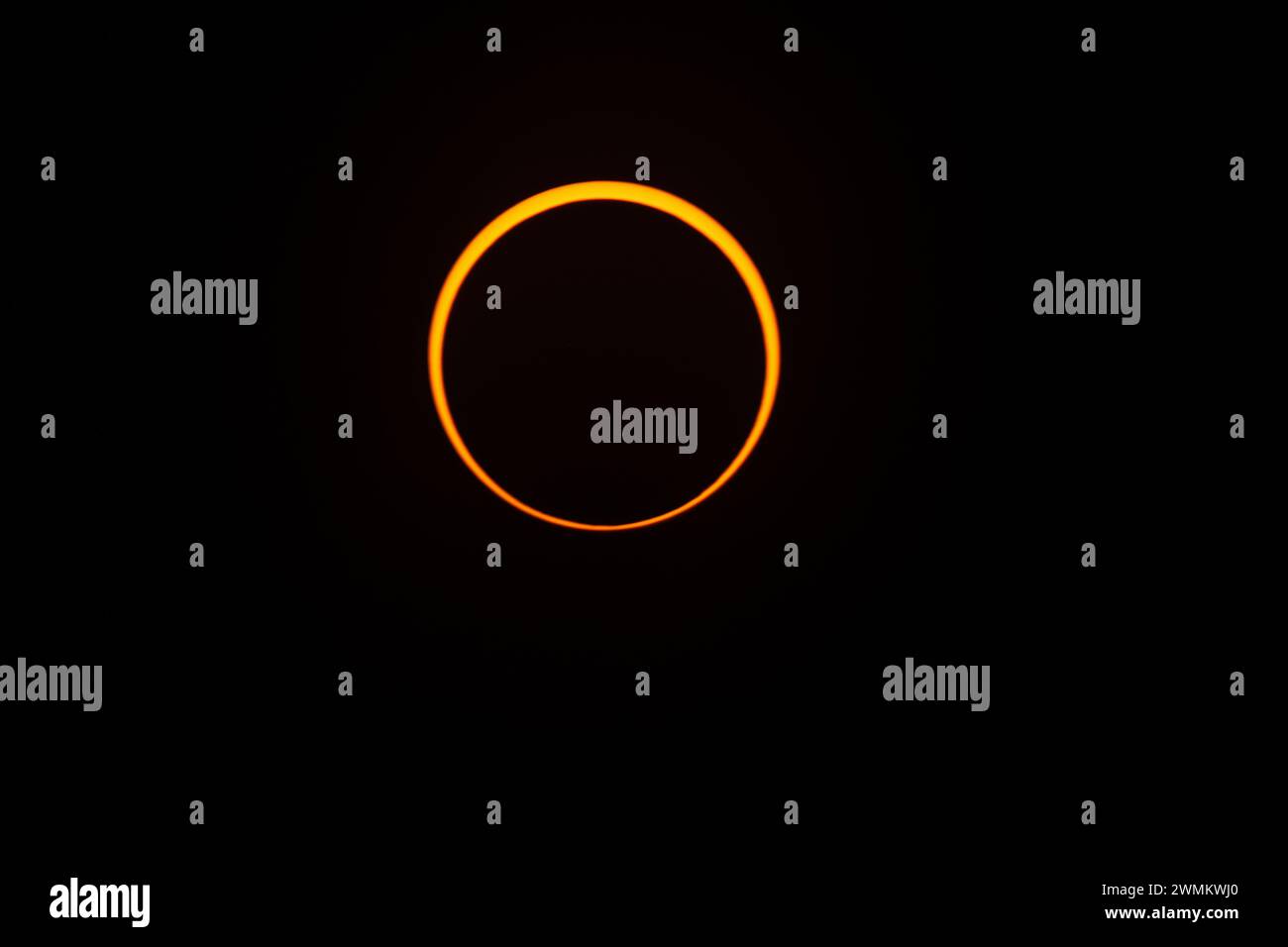
An annular solar eclipse occurs when the Moon passes between Earth and the Sun but does not completely cover the Sun’s disk. This phenomenon creates a stunning visual known as a ‘ring of fire’ effect, where the edges of the Sun are visible around the Moon. These celestial events are not only beautiful but also serve as significant educational opportunities regarding the mechanics of our solar system.
Details on the October 2023 Event
The next annular solar eclipse is scheduled for 14th October 2023. This eclipse will be particularly exciting as it offers broad visibility across parts of the United States, Central America, and South America. The path of annularity will begin in the Pacific Ocean, passing through the western United States, including states such as Oregon and California, before continuing into Central America and down through Colombia and Brazil.
Viewing and Safety Precautions
It is crucial for spectators to take safety precautions when viewing a solar eclipse. Unlike a total eclipse, where looking directly at the event is safe during totality, annular solar eclipses require proper solar viewing glasses or solar filters to safely observe the phenomenon, even when the Sun is partially obscured.
Significance of the Annular Solar Eclipse
Solar eclipses are of great scientific interest, providing opportunities for study across various fields such as astronomy and atmospheric sciences. Events like the annular solar eclipse of 2023 inspire public interest in science and can boost local economies through increased tourism and educational opportunities.
Conclusion: Anticipating the Event
The annular solar eclipse of October 2023 promises to be a fascinating spectacle for sky-watchers. As preparations commence, enthusiasts are encouraged to make plans for viewing, whether in the optimal path of annularity or from designated viewing parties. This event will not only captivate audiences but also remind us of the beauty and complexity of our universe.