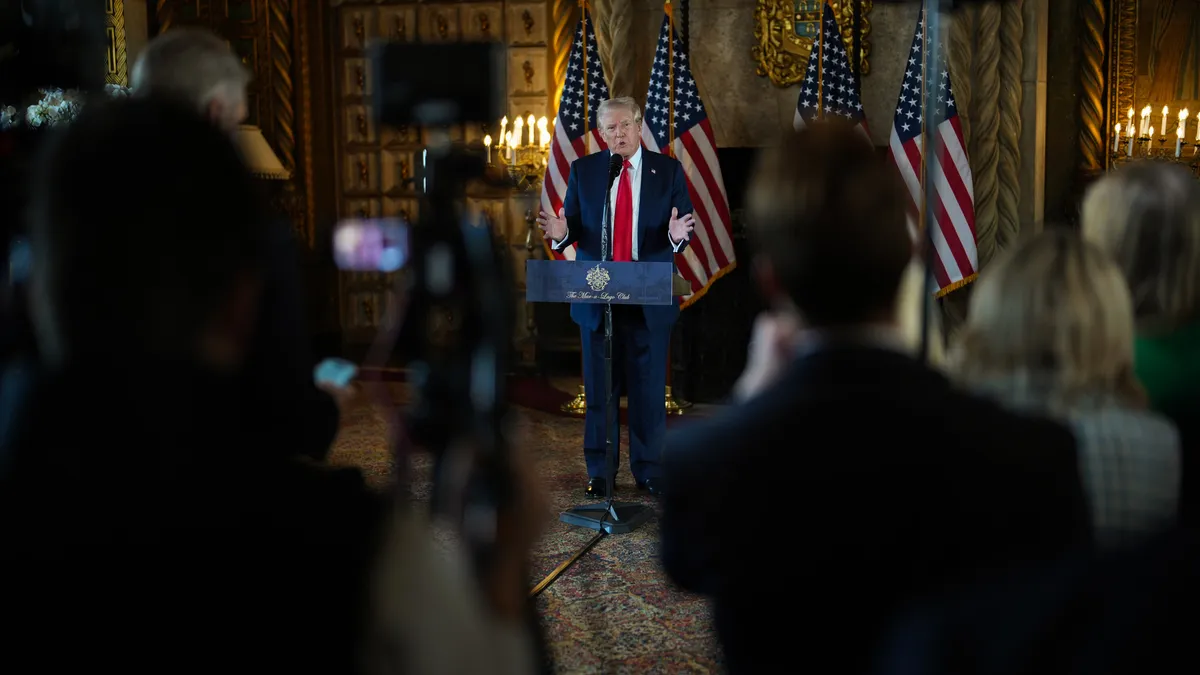
What does Donald Trump’s latest press conference reveal about U.S.-Iran relations? In a recent address, Trump made it clear that he views Iran as a significant threat, issuing stark warnings that the entire country could be taken out in one night.
During the press conference, Trump highlighted a successful rescue mission for a downed airman, emphasizing the military’s commitment to leaving no American behind. He stated, “But in the U.S. military, we leave no American behind,” reinforcing the administration’s stance on military operations.
Trump’s rhetoric escalated as he claimed that Iran “got lucky” when they took out a U.S. fighter jet, further intensifying the ongoing conflict. The former president’s comments come amid a backdrop of rising global gas prices, which have surged due to Iran’s closure of the Strait of Hormuz, a critical passage for 20 percent of the world’s oil.
The current situation has led to gas prices in the U.S. reaching $4 per gallon, with Trump warning that these high prices might persist into the summer. Polling indicates that a majority of Americans oppose the war in Iran, yet Trump has consistently asserted that the conflict would last roughly six weeks.
In a show of military solidarity, CIA Director John Radcliffe, Defense Secretary Pete Hegseth, and Gen. Dan Caine recounted the details of the recent rescue operation, showcasing the U.S. military’s capabilities. However, the timeline for a ceasefire remains uncertain, especially after Iran rejected the latest proposal, insisting on guarantees against future attacks.
Israeli Defense Minister Israel Katz also announced an attack on Iran’s South Pars petrochemical plant, further complicating the geopolitical landscape. As tensions rise, Trump’s approval ratings among Republicans have fluctuated, with 43 percent strongly approving of his job performance, down from 52 percent in January.
As the situation evolves, the timeline for the war’s conclusion and the feasibility of Trump’s objectives remain unclear. Details remain unconfirmed regarding the potential for a lasting peace or further escalations in military action.