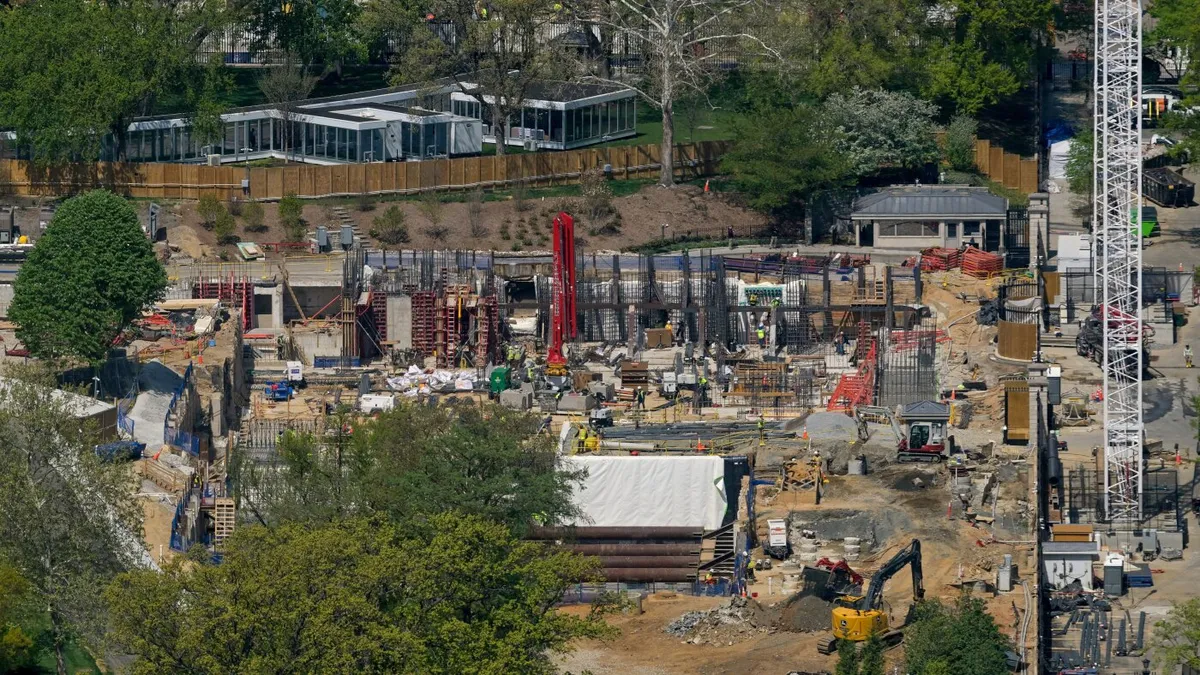
As the Trump administration pushes forward with its ambitious plans for a new ballroom at the White House, the project has encountered significant legal challenges. Just before a critical ruling, the U.S. District Court had ordered a temporary halt to construction, citing a lack of congressional approval. This ruling raised concerns among Trump officials about potential national security risks associated with stopping the project.
On April 11, 2026, the U.S. Court of Appeals for the District of Columbia Circuit intervened, allowing construction to continue until April 17, 2026. This decision temporarily stays a previous ruling by U.S. District Judge Richard Leon, who had expressed confidence that the preservationist group suing to stop the project was likely to succeed.
The ballroom, which is expected to seat 1,000 guests and cost a minimum of $300 million, has been a top priority for Trump since he took office. The construction plan includes not only the ballroom itself but also bomb shelters, military installations, and a medical facility, reflecting the administration’s focus on national security.
In February, the Commission of Fine Arts, which includes a majority of Trump appointees, approved the project, further emphasizing its significance to the administration. However, the National Trust for Historic Preservation has raised concerns about the historical integrity of the White House, with its representatives stating, “The National Trust remains committed to honoring the historic significance of the White House.”
Judge Leon had previously noted that halting the ongoing construction could lead to logistical issues, highlighting the complexities involved in such a high-profile project. The Trump administration is now seeking to extend the suspension of the lower court’s order by an additional two weeks, underscoring the urgency of the situation.
As the appeals court ruled 2-1 in favor of allowing construction to proceed temporarily, it marked a significant, albeit provisional, victory for Trump in this ongoing legal battle. National Park Service lawyers emphasized, “Time is of the essence!” as they navigate the challenges posed by the preservationist lawsuit.
The ballroom construction project is not just about creating a new space for events; it symbolizes the Trump administration’s broader vision for the White House and its operations. The military’s involvement in building a complex beneath the ballroom adds another layer of complexity to the project, raising questions about the necessity of certain aspects for ensuring safety and security.
Details remain unconfirmed regarding the full scope of the construction and its implications for the historic site. As the deadline approaches, all eyes will be on the Trump administration and the courts to see how this contentious issue unfolds.