The Supreme Court’s ruling on April 29, 2026, significantly narrows the protections of the Voting Rights Act, allowing states like Louisiana to enact racially discriminatory electoral maps with minimal oversight. This decision impacts not only the political landscape but also the civil rights of minority voters.
The case, Louisiana v. Callais, stemmed from four years of litigation over Louisiana’s congressional map. The Supreme Court ruled in a 6-3 decision, striking down a congressional map that had been designed to maintain minority representation. Justice Samuel Alito stated that while they were not explicitly striking down Section 2 of the Voting Rights Act, they were interpreting it to require proof of intentional discrimination.
Justice Elena Kagan dissented strongly, arguing that this ruling eviscerates the Voting Rights Act as it has been understood for decades. She emphasized that this decision effectively invalidates Section 2 as a protective measure against discriminatory voting systems — a cornerstone in safeguarding minority voting rights since its amendment in 1982.
This ruling allows states to draw district lines that could undercut the political power of minority voters. In Louisiana specifically, the state is now expected to draw a new congressional map by 2024. This change could lead to a redistricting wave that enables Republicans to flip up to 19 majority-minority seats currently held by Democrats.
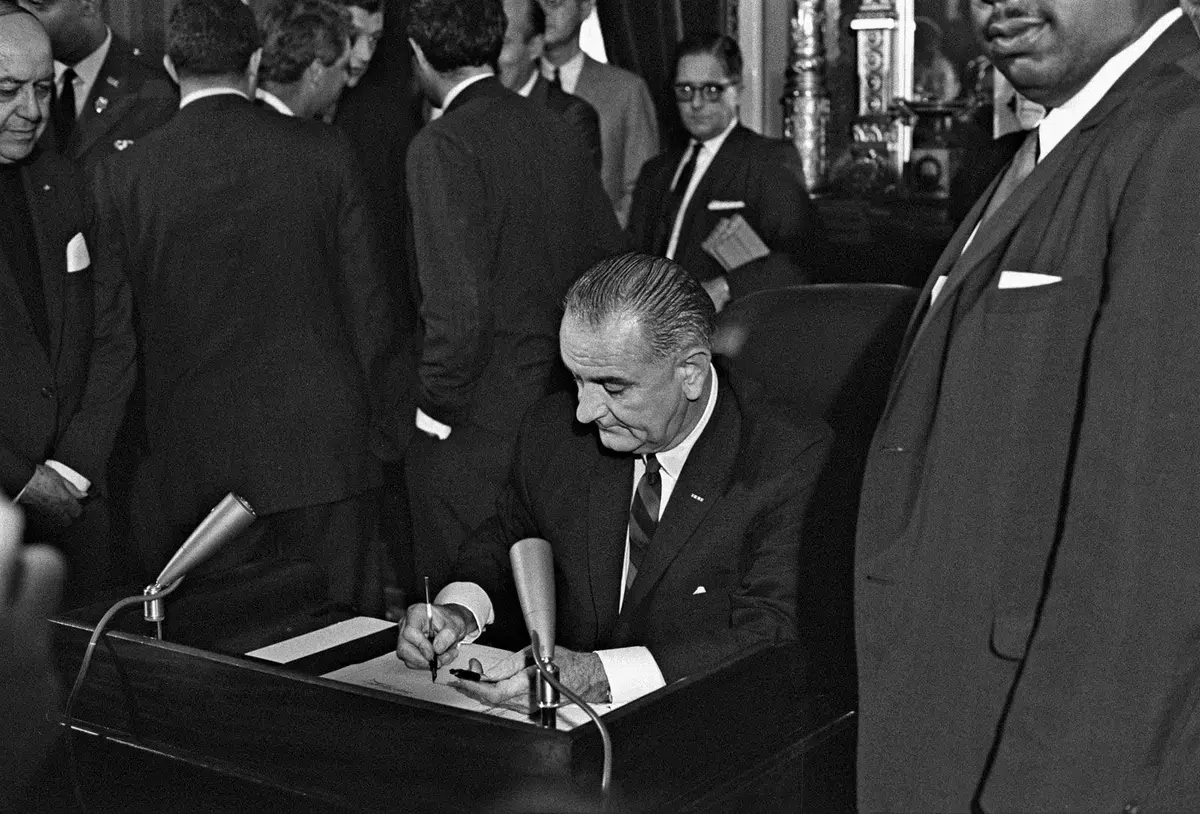
The implications are vast. The Voting Rights Act was born out of the civil rights movement and has been reauthorized multiple times by Congress. It has served as a primary protection against racial gerrymandering and discrimination for nearly 60 years. With this ruling, however, states may find themselves with more leeway to manipulate electoral maps without facing significant federal scrutiny.
In light of this decision, civil rights advocates express grave concern. Derrick Johnson remarked that today’s decision is “a devastating blow” to what remains of the Voting Rights Act, essentially providing a license for politicians who want to rig the system by silencing entire communities. Rick Hasen described it as an earthquake for American politics — one whose aftershocks will be felt in elections for years to come.
The future remains uncertain as officials and advocates prepare for potential challenges ahead. The next steps will likely involve intense scrutiny over how states implement these new guidelines and what legal actions may follow.