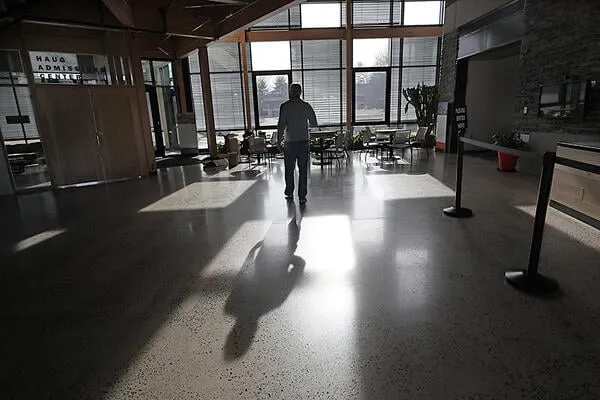
“The financial realities we face: declining enrollment, the weight of long-standing debt, and stalled progress on land development left us no other responsible path,” said Jose Fuentes, Chair of the Hampshire College Board of Trustees, announcing the closure of the institution at the end of the fall 2026 semester.
Founded in 1965, Hampshire College has long been recognized for its student-driven curriculum and progressive values. However, the college’s enrollment has plummeted by nearly half since the fall of 2015, culminating in a mere 168 new students enrolled for the fall of 2026, significantly below the target of 300.
The financial strain has been exacerbated by a $21 million bond that the college was unable to refinance, alongside an endowment valued at approximately $26.5 million, with $23.5 million of that in restricted funds. The New England Commission of Higher Education had previously placed the college on show cause status due to concerns over its fiscal resources.
In the fall of 2024, Hampshire College had a recent high point of 844 total students, but the decline continued, with only 750 full-time students enrolled earlier in 2026. This downward trend reflects broader challenges faced by many small liberal arts colleges across the United States.
Ken Burns, a notable alumnus, expressed his deep connection to the institution, stating, “Hampshire College is woven into the very fabric of who I am. It’s where I learned that there is freedom in searching, and even in failure.”
Current students are grappling with the impending closure. William “Wolfie” Krebs, a Hampshire student, remarked, “I hope it’s not seen as a failure, because it wasn’t. It’s brought so much influence into the world and into the community, the immediate area.”
Joan Priester, a sophomore, added, “I think really the death of Hampshire College is kind of a reflection of the current conditions of the times, the material conditions of the economy faltering and of the social fabric of America deteriorating.”
As the college prepares to close, final-year students will be allowed to complete their degrees, while other students will have transfer options to partner institutions such as Amherst College and Smith College. The closure marks a significant moment in the landscape of higher education in Massachusetts and beyond.