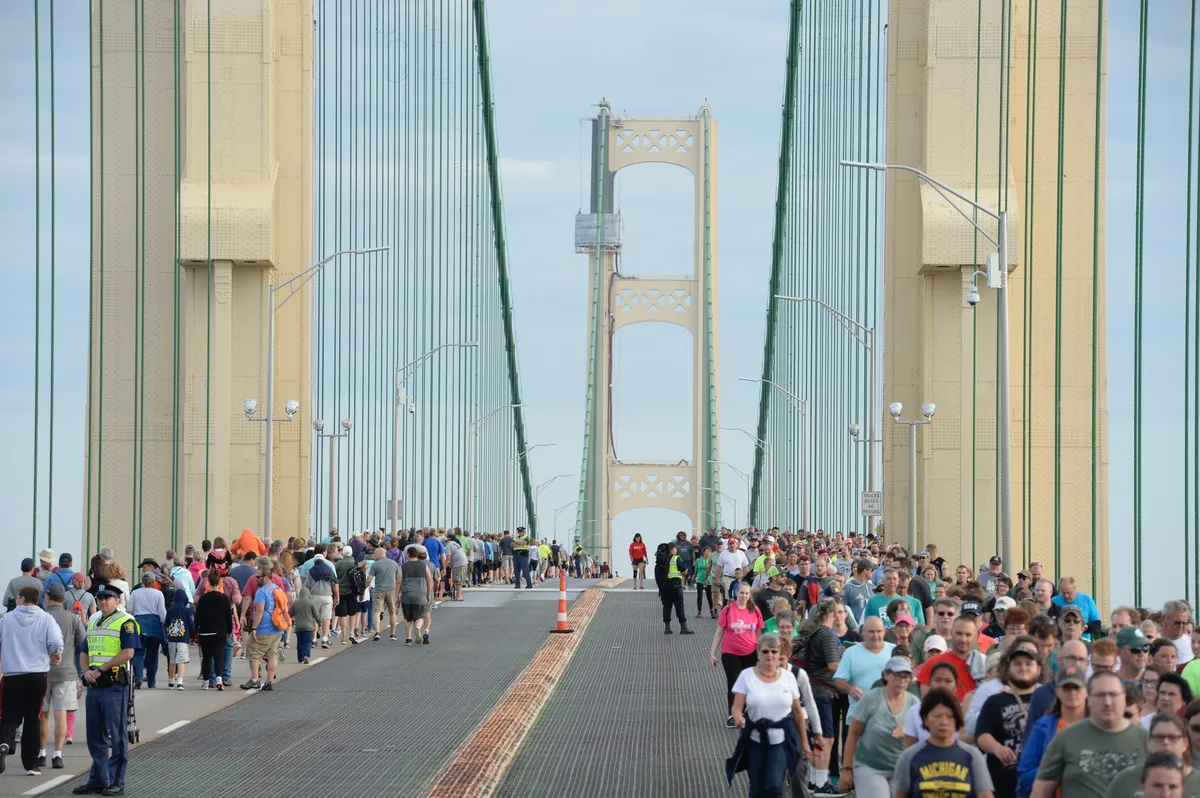
The Mackinac Bridge, a vital link between Michigan’s Lower and Upper Peninsulas, faced significant disruptions on March 15, 2026, due to extreme weather conditions. Prior to this event, the bridge was expected to remain open, facilitating regular travel across the region.
However, just before 1 p.m. on that day, the bridge was closed in both directions as high winds reaching up to 70 mph and heavy snowfall were forecasted. More than 36 inches of snow were predicted, leading to hazardous conditions for motorists.
As the weather worsened, Mackinac Island firefighters encountered a rescue situation on Lake Huron. A man was stranded on the ice, prompting a response from the U.S. Coast Guard, which successfully rescued him. Fire Chief Jason St. Onge remarked on the perilous conditions, stating, “The ice is no joke, not an inland lake or a mill pond, conditions can and do change by the minute.”
After approximately seven hours of closure, the Mackinac Bridge reopened, allowing traffic to resume. The closure not only affected local commuters but also highlighted the challenges faced by emergency services during severe weather events.
In addition to the bridge closure, the National Weather Service had issued a blizzard warning for the Upper Peninsula of Michigan. Reports indicated varying snowfall amounts across the region, with 20 inches recorded in Pellston, 18 inches in St. Ignace, and 26 inches in Spalding.
Governor Gretchen Whitmer addressed the situation, emphasizing the dangers posed by the weather: “Heavy snow, ice, and strong winds are already impacting our northern Michigan communities, making travel unsafe on the roads.” This statement underscored the urgency of the situation and the need for caution among residents.
The rescue operations conducted by the U.S. Coast Guard Cutter Mackinaw further illustrated the risks associated with the severe weather. Firefighters took 40 minutes to walk 2,000 feet back to shore, showcasing the challenging conditions they faced.
As the community begins to recover from this weather event, the reopening of the Mackinac Bridge is a crucial step in restoring normalcy. The swift response from emergency services and the cooperation among local authorities played a significant role in managing the crisis.
While the immediate danger has passed, the impact of such severe weather events on infrastructure and safety remains a concern for local officials and residents alike. The situation serves as a reminder of the unpredictable nature of Michigan’s winter weather.
Details remain unconfirmed regarding any further implications of the storm on local infrastructure and services.