The NASA Artemis II mission is poised to make history as the first crewed lunar mission in over 50 years, with a crew of four astronauts set to observe the Moon on April 6, 2026. This mission marks a significant milestone in space exploration, as it will allow humans to see the far side of the Moon illuminated for the first time.
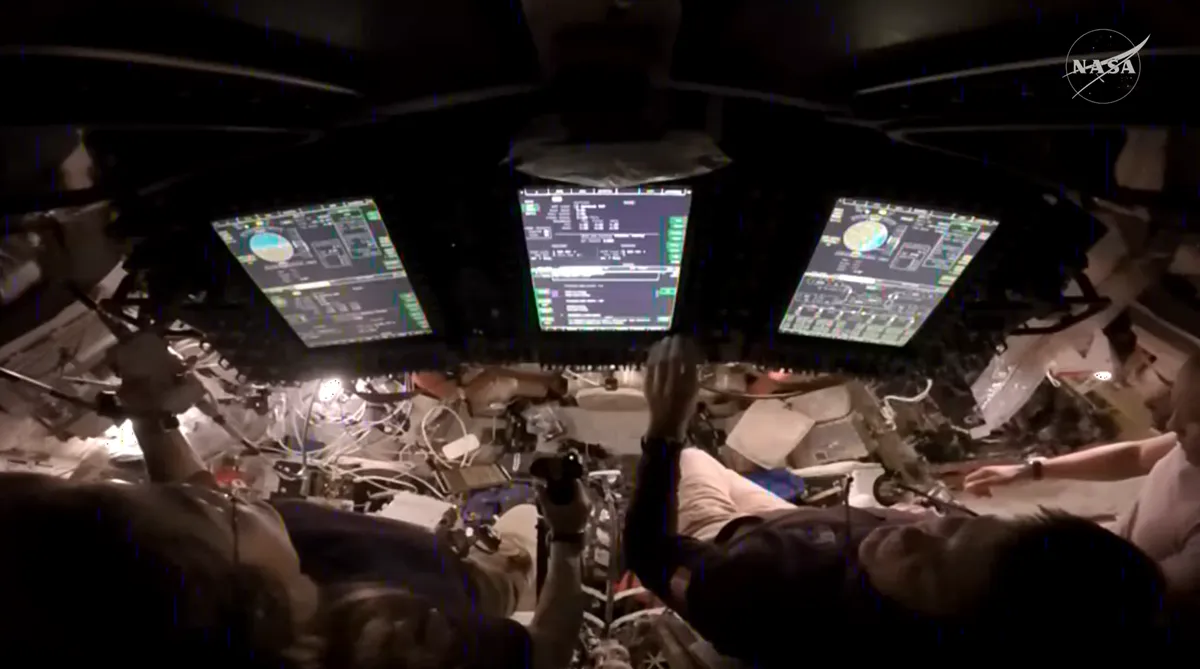
The Artemis II crew includes Reid Wiseman, Victor Glover, Christina Koch, and Jeremy Hansen. They recently completed a 41 minutes manual piloting demonstration on flight day 4, showcasing their skills and readiness for the upcoming lunar flyby.
During their mission, the crew will fly 4,000 miles above the Moon, where they plan to observe and photograph distinctive lunar features, including the Orientale basin and Ohm crater. The Orientale basin, which formed approximately 3.8 billion years ago, is a key target for the astronauts, who have memorized 15 specific features to capture during their flyby.
As they prepare for this historic journey, Reid Wiseman remarked, “The Earth is almost in full eclipse. The moon is almost in full daylight, and the only way you could get that view is to be halfway between the two entities.” This perspective highlights the unique vantage point the crew will experience.
Christina Koch expressed her excitement, stating, “Being human up here is one of the coolest things about this mission.” Her sentiment reflects the broader enthusiasm surrounding the Artemis II mission, which aims to reignite public interest in lunar exploration.
The Orion capsule, which will carry the astronauts, has a habitable volume roughly equivalent to a camper van, providing the crew with essential living space during their 10 days in space. Observers are keen to see how the crew adapts to this environment as they embark on their journey.
As the mission approaches, Kelsey Young, a mission scientist, emphasized the importance of human observation, stating, “The human eye is the most nuanced detector there is, especially when connected to a well-trained human brain.” This underscores the value of having astronauts on board to gather data and insights that automated systems may miss.
Details remain unconfirmed regarding the specific observations the crew will make, but the anticipation builds as they prepare for their flyby. The Artemis II mission not only aims to advance scientific knowledge but also serves as a stepping stone for future lunar exploration and potential human settlement.