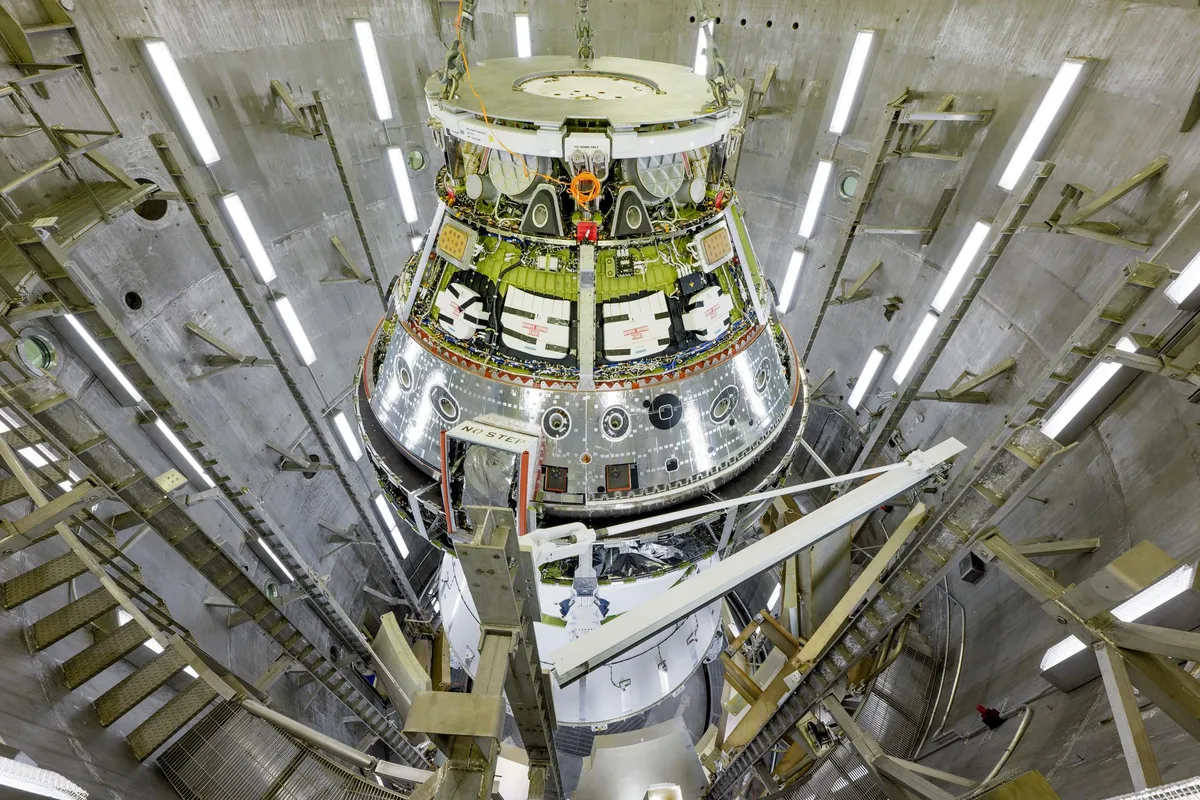
The heat shield for NASA’s Artemis II mission faced scrutiny long before this historic flight. Initial expectations were cautious, especially after the damage observed on the Artemis I mission. Engineers anticipated challenges, particularly regarding the heat shield’s ability to withstand extreme temperatures during re-entry.
But something changed. On April 10, 2026, the Orion spacecraft splashed down in the Pacific Ocean—2.9 miles from its targeted landing site. Immediate inspections revealed that the heat shield had kept the crew safe, performing as expected with no unusual conditions identified.
Data from NASA indicates that the char loss behavior observed on Artemis I was significantly reduced in this mission. The numbers tell a compelling story: during re-entry, the spacecraft reached speeds of 37,000 km/h—35 times the speed of sound. Such velocities require robust engineering and design.
Charles Camarda, a notable figure in aerospace engineering, remarked on the advancements made since Artemis I. “The char loss behavior observed on Artemis I was significantly reduced, both in terms of quantity and size,” he noted. This improvement is not merely cosmetic; it speaks to enhanced safety protocols and design refinements.
Moreover, Navy divers photographed the heat shield shortly after splashdown—an image that will likely become iconic in space exploration history. The heat shield is covered with AVCOAT tiles designed specifically to absorb impact heat, a critical feature given that temperatures around the capsule can soar to thousands of degrees Celsius during re-entry.
Yet not all systems were flawless. The life support system experienced issues with the space toilet during the flight—a reminder that even amidst success, challenges persist. Still, NASA plans to transport the heat shield to the Marshall Space Flight Center for further examination.
This progress sets a promising tone for upcoming missions. The Artemis III mission is slated for 2027 and aims for lunar landing—an ambitious goal that hinges on lessons learned from Artemis II.
Experts agree that improvements in technology are vital for future endeavors. As Christina Koch stated, “We did not detect any unusual conditions or critical anomalies.” This statement reinforces confidence as NASA prepares for its next steps toward returning humans to the Moon and beyond.
In summary, while details remain unconfirmed about certain aspects of this mission, one thing is clear: The NASA Artemis II heat shield has marked a significant milestone in ensuring crew safety during re-entry.